About the tour
Nature at its finest, wildlife in pure form, authentic local characters, refreshing walking trails, mind blowing night skies, fascinating culture, ancient stories, dreamlike experiences. Feel the freedom on your next outback journey.
Stretching from the rugged red earth of Mount Augustus and Kennedy Ranges in the north, to the sweeping snow-white beaches of Esperance and the southern coast, the majestic changing landscapes of Australia’s Golden Outback and Ningaloo Reef will recharge your spirit and allow you the freedom to embark on unforgettable outback adventures.
“Nature paints an unforgettable picture in the Golden Outback, which stretches from countryside to coastline”
Tour itinerary
Day 1 - Perth to Esperance
Gold, Flight & First Impressions
Recommend you visit the Perth Mint. The Perth Mint’s connection to Kalgoorlie is historic, as the gold rush in the area spurred the Mint’s founding in 1899 to refine and mint gold coins.
Record breaking coin. An icon of the Exhibition is the Australian Kangaroo One Tonne Gold Coin, the largest and most valuable coin in the world. It has held the Guinness World Record for the largest gold coin since 2012.
Witness a live gold pour and touch or try to lift a gold bullion. Discover Western Australia’s unique history. Hour long tours 9.30am, 10.30am, 11.30am,
Pickup you paid for tickets at reception at the Perth Mint
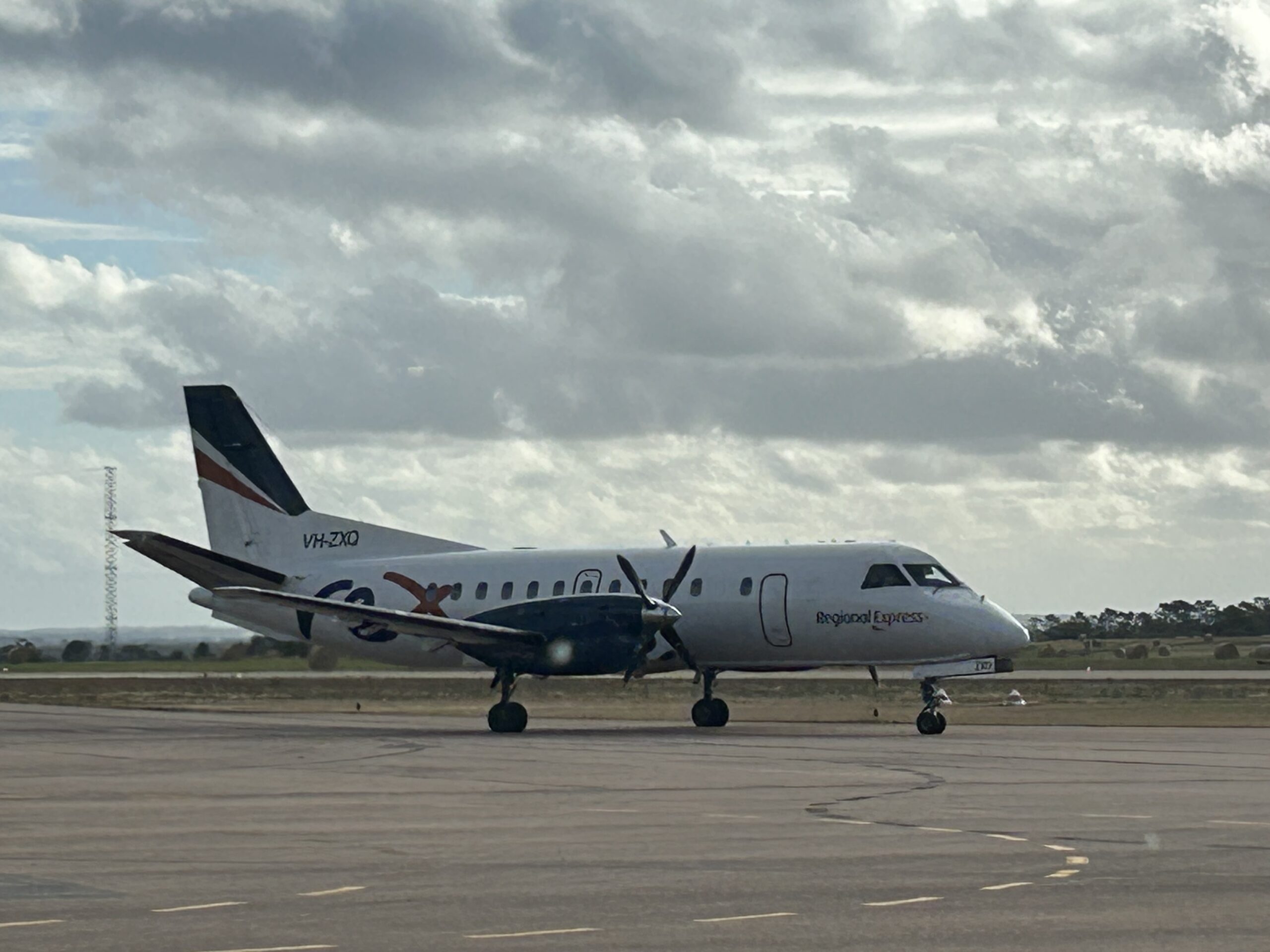
Depart Perth airport 2:15pm
- Arrive Esperance 3:50pm
- Meet at Esperance Airport
Check into Esperance accommodation
Two-night stay
Welcome Dinner and get to know your travel companions before embarking on a breath-taking experience of wonder.
Day 2 – Esperance to Wharton Bay
Wharton Bay, Condinup, Cape Le Grand, Lucky Bay
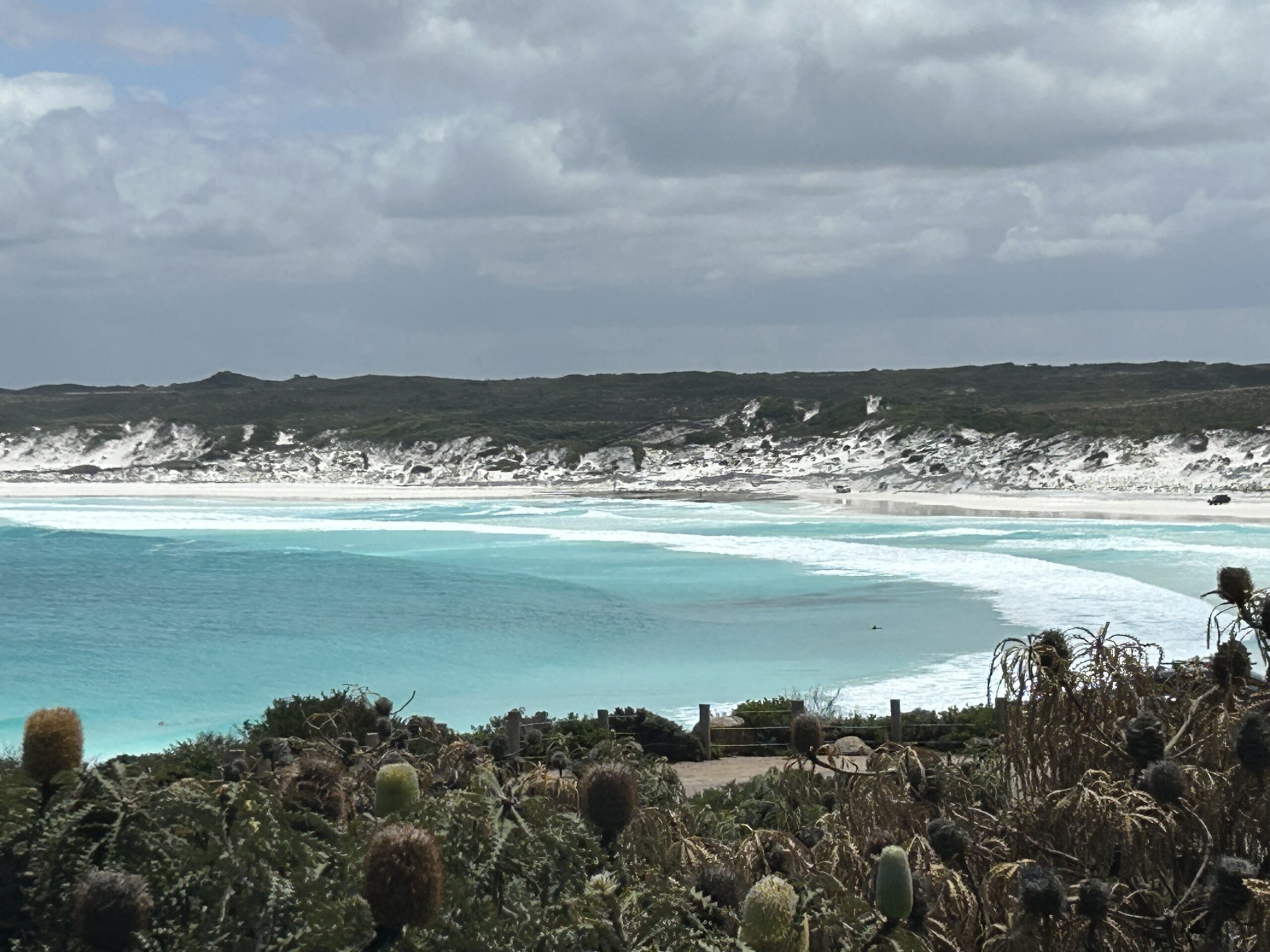
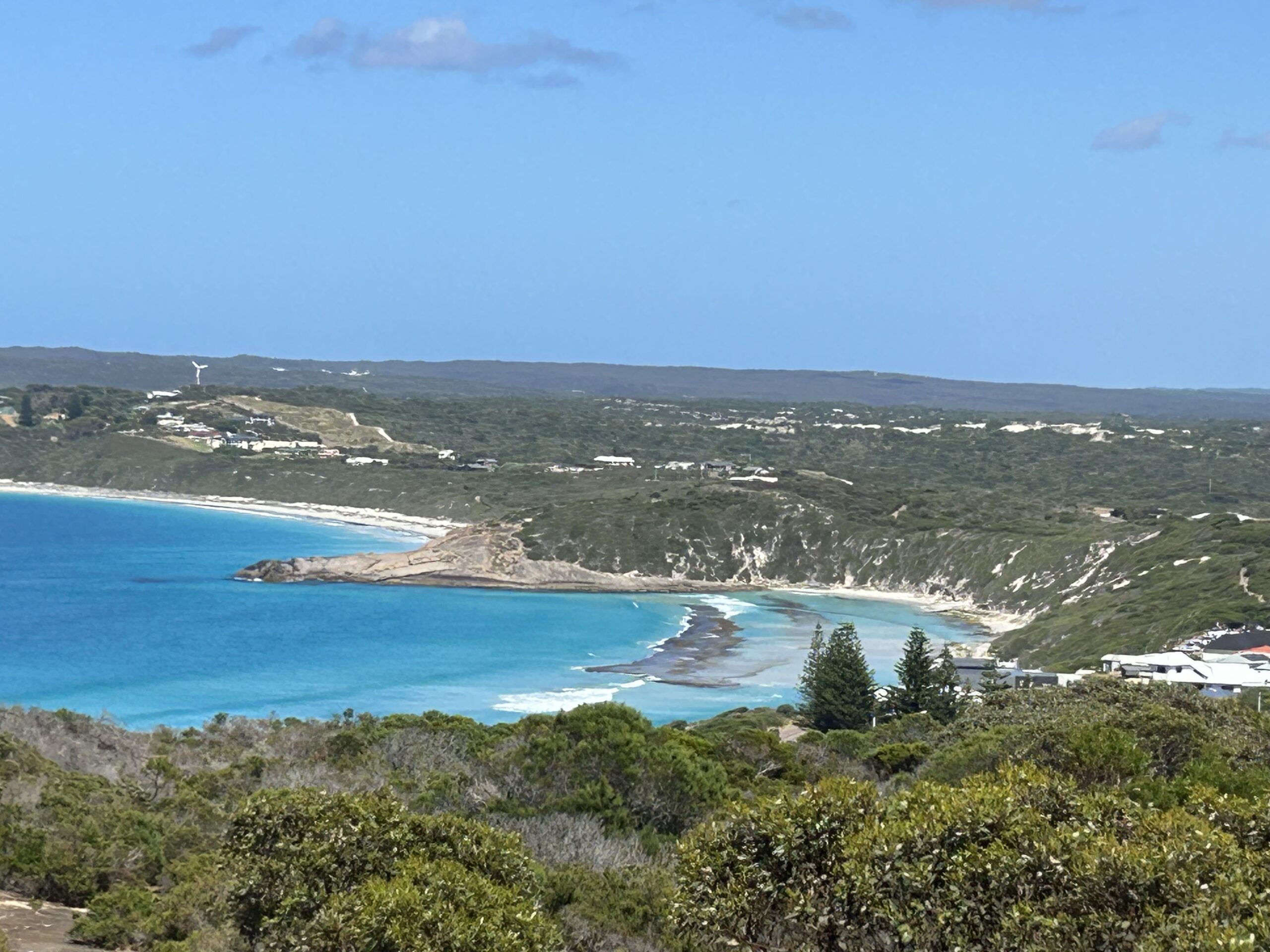
Proclaimed as having among the finest beaches in Australia, Esperance packs a coastal punch that’s hard to beat. Add one of the most enchanting stretches of oceanside road you’ll ever set wheels on, and for reasons that will become obvious, Esperance’s Great Ocean Drive will leave you wanting to drive on and on. Marvel at the polished granite boulders and formations rising from the water and watch out for dolphins surfing in the crystal clear perfect shaped waves.
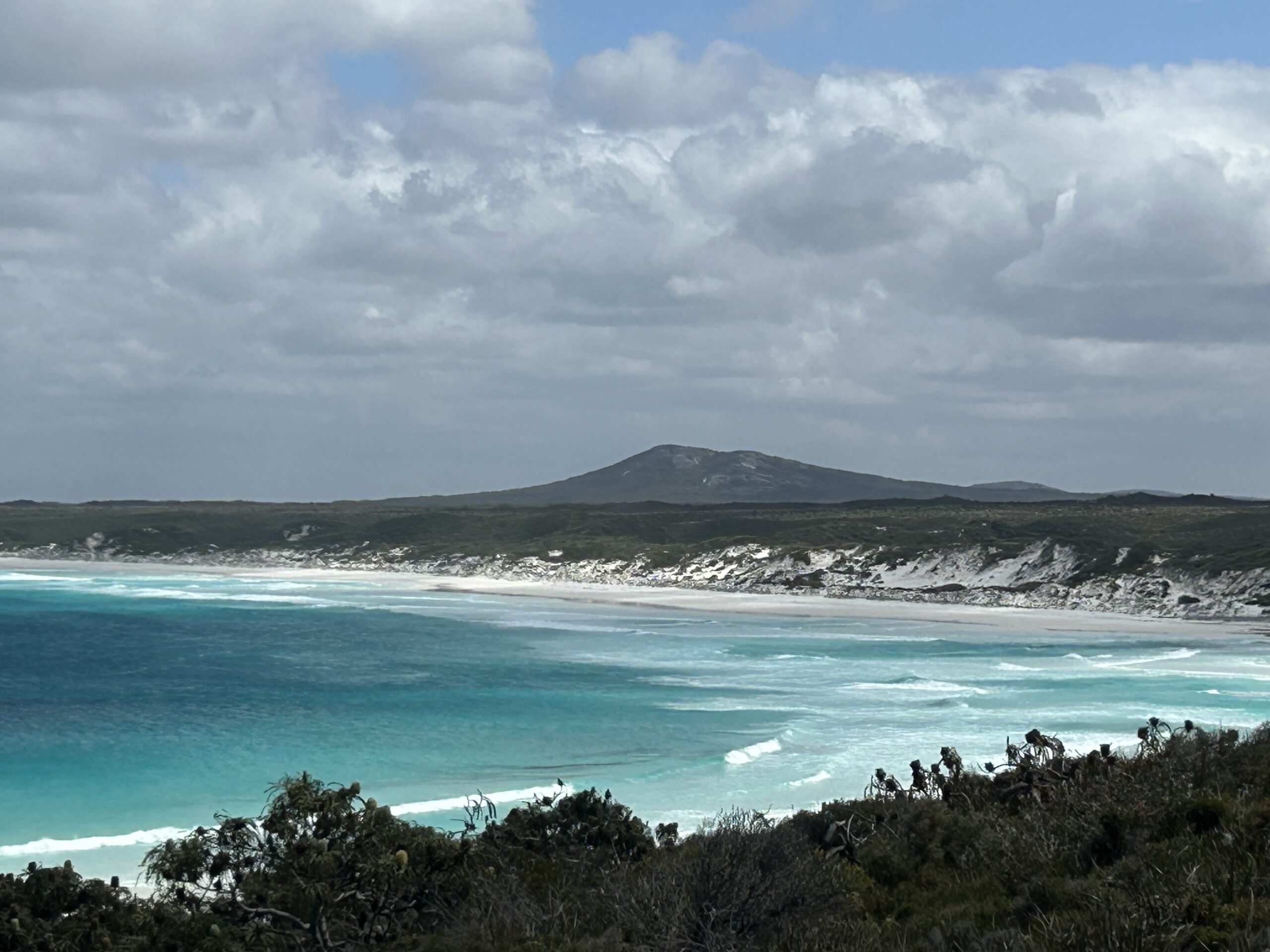
We leave for Wharton Bay. Wharton Beach offers magnificent coastal scenery, a superb beach of iridescent white sand and crystal blue waters. It is a photographer’s delight!
Recent erosion at Wharton Beach east of Esperance uncovered remarkable ancient forest
News Article PerthNow. “The remains of an ancient wetland forest and Aboriginal artefacts have resurfaced at a popular Esperance beach, after winter storms eroded the land.
Rangers from the Esperance Tjaltjraak Native Title Aboriginal Corporation first observed the effects of erosion at Wharton Beach in August, which has seen old tree stumps resurface and exposed embedded Aboriginal crafting materials within the terrain.
To uncover the land’s history and heritage, the group had sent off tree samples to researchers at the University of New South Wales Radiocarbon Laboratory, which senior cultural advisor Doc Reynolds said uncovered “remarkable” findings.
“We did some carbon dating on one of the stumps that was exposed, and it came back that it last saw the light of day 7000 years ago,” he said.
Dr Reynolds said the group had also drilled a core into the peat which had prevented the stumps from deteriorating and uncovered pollen grains which were being analyzed by researchers at Curtin University.”
Enjoy an Aussie country lunch at the Condinup Tavern.
This afternoon visit Cape Le Grand National Park and Lucky Bay. This beach is famous for its kangaroos which are often seen sunning themselves on the white sandy shoreline.
Accommodation Esperance Hospitality by Best Western
Day 3 – Esperance to Kalgoorlie
Esperance, Norseman, Kambalda, Coolgardie, Kalgoorlie
This morning, before we leave Esperance for Norseman and Kalgoorlie tour along the Esperance Great Ocean Drive as a spectacular farewell to the region.
Norseman is situated at the junction of Highways 1 and 94; Norseman is at the crossroads to everywhere and the gateway to the Nullarbor Plains via the Eyre Highway to Eucla on the South Australian border.
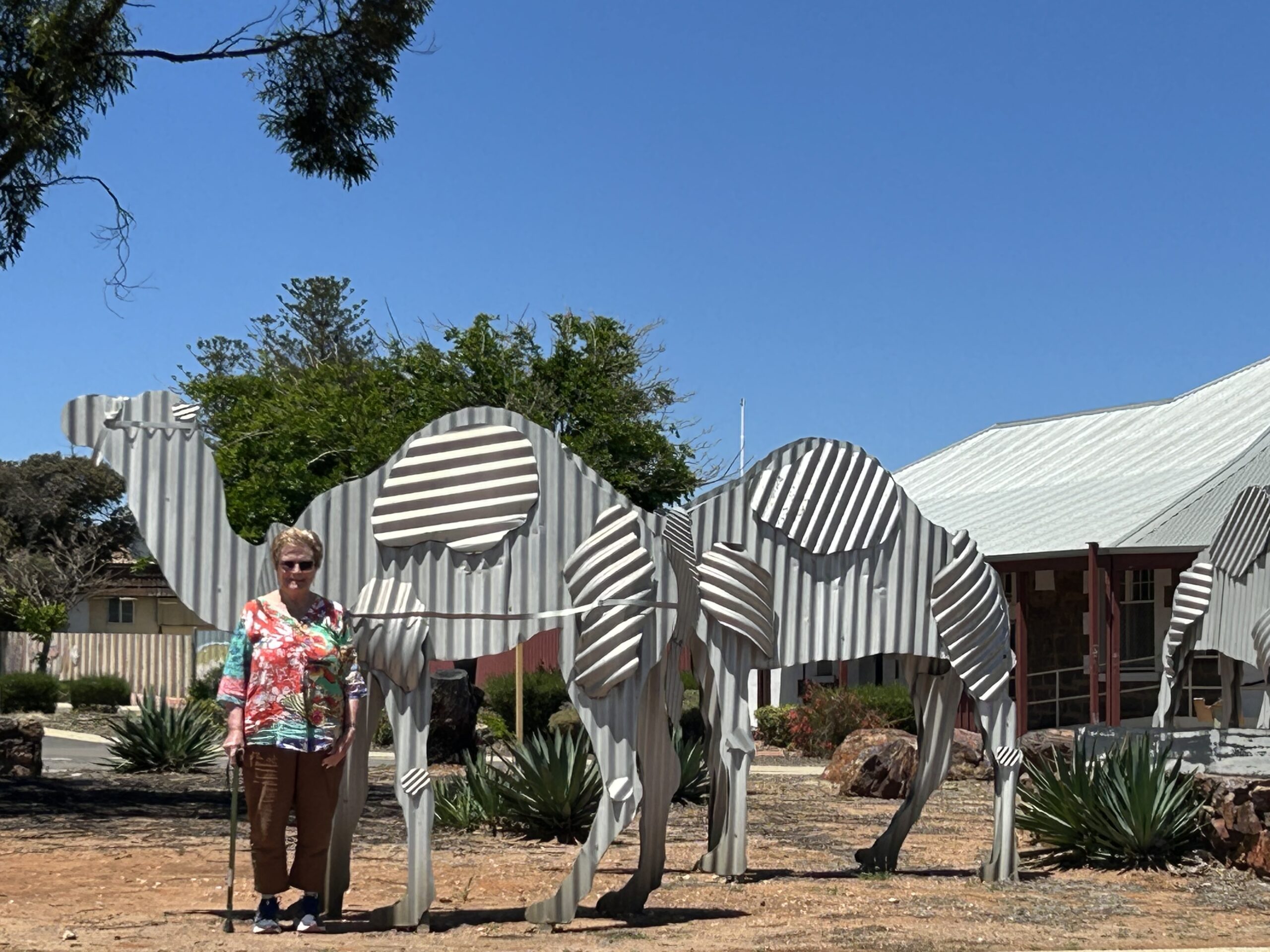
The Tin Camels this attraction is sure you give you the inside information. During Norseman’s early days camelsused to freight and mail to and from the town.
Norseman’s history began with an 1894 gold discovery by Laurie Sinclair, whose horse, Norseman, kicked up a gold nugget, leading to the proclamation of the town in 1895/1896 and an era of significant gold mining. Despite water scarcity, the town developed into a significant gold-producing centre, the site of Australia’s longest continuously running gold mine, and a crucial stopover point on the Nullarbor Plain.
Kambalda Red Hill Lookout
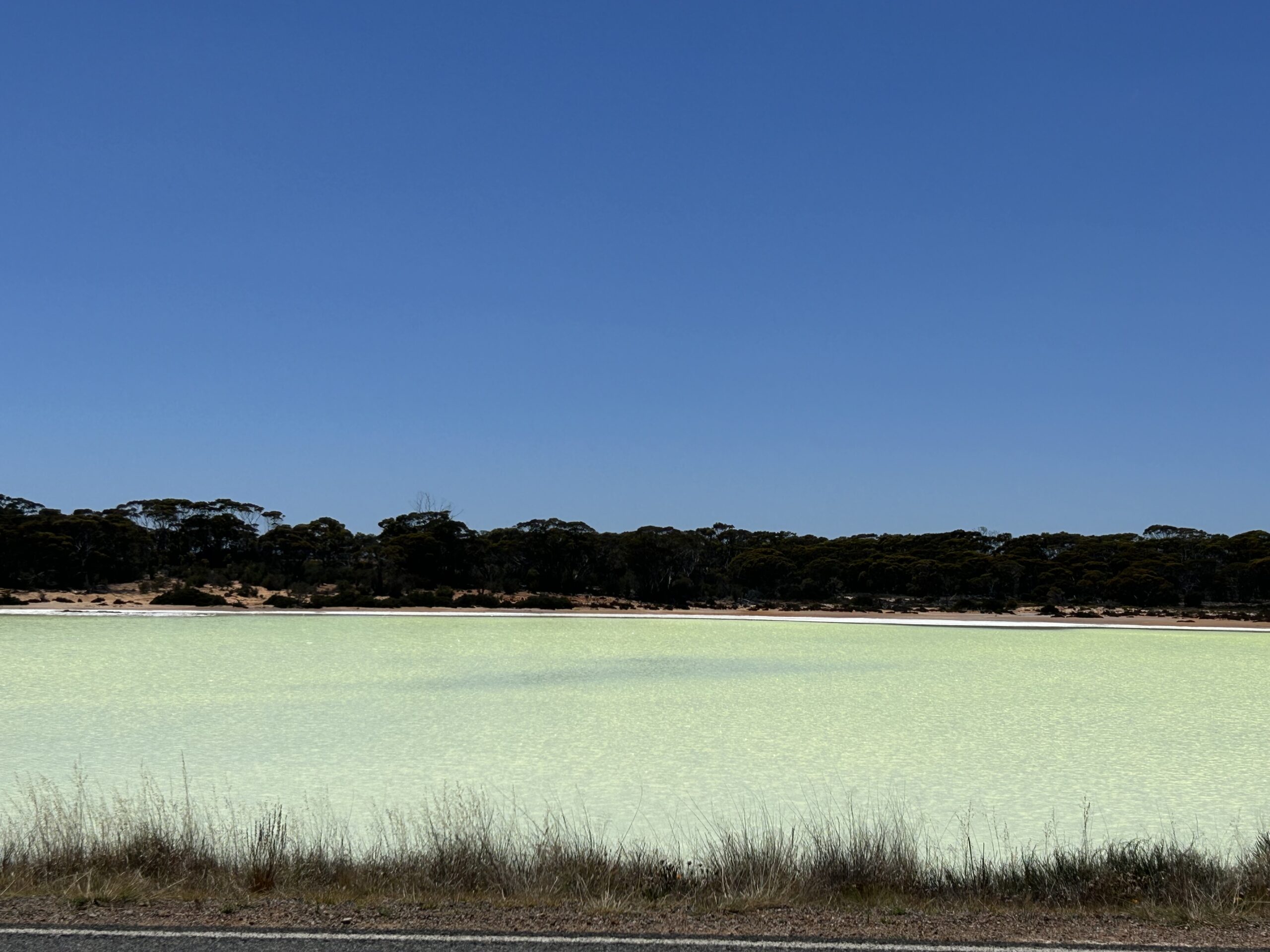
Kambalda is a small mining town about 60 kilometres from the Kalgoorlie in Western Australia, within the Goldfields. It is split into two townsites 4 kilometres apart, Kambalda East and Kambalda West; and is found on the western edge of a giant Salt Lake, Lake Lefroy. At the last census, Kambalda had a combined population of 2,468.
Kambalda was set up in 1897 at the base of nearby Red Hill during a mining boom when prospectors from all over Western Australia came into the area. The location owed its existence to Percy Larkin, a prospector who discovered gold in the vicinity. For years Kambalda was mined for its gold but soon after nickel was discovered.
Coolgardie in 1892 became the birthplace of the gold rush that fuelled the largest mass migration of people in Australia’s history. Proudly keeping its pioneering heritage charms, it’s one of the nation’s best preserved gold mining towns and marks the start of an epic historical adventure, the Golden Quest Discovery Trail.
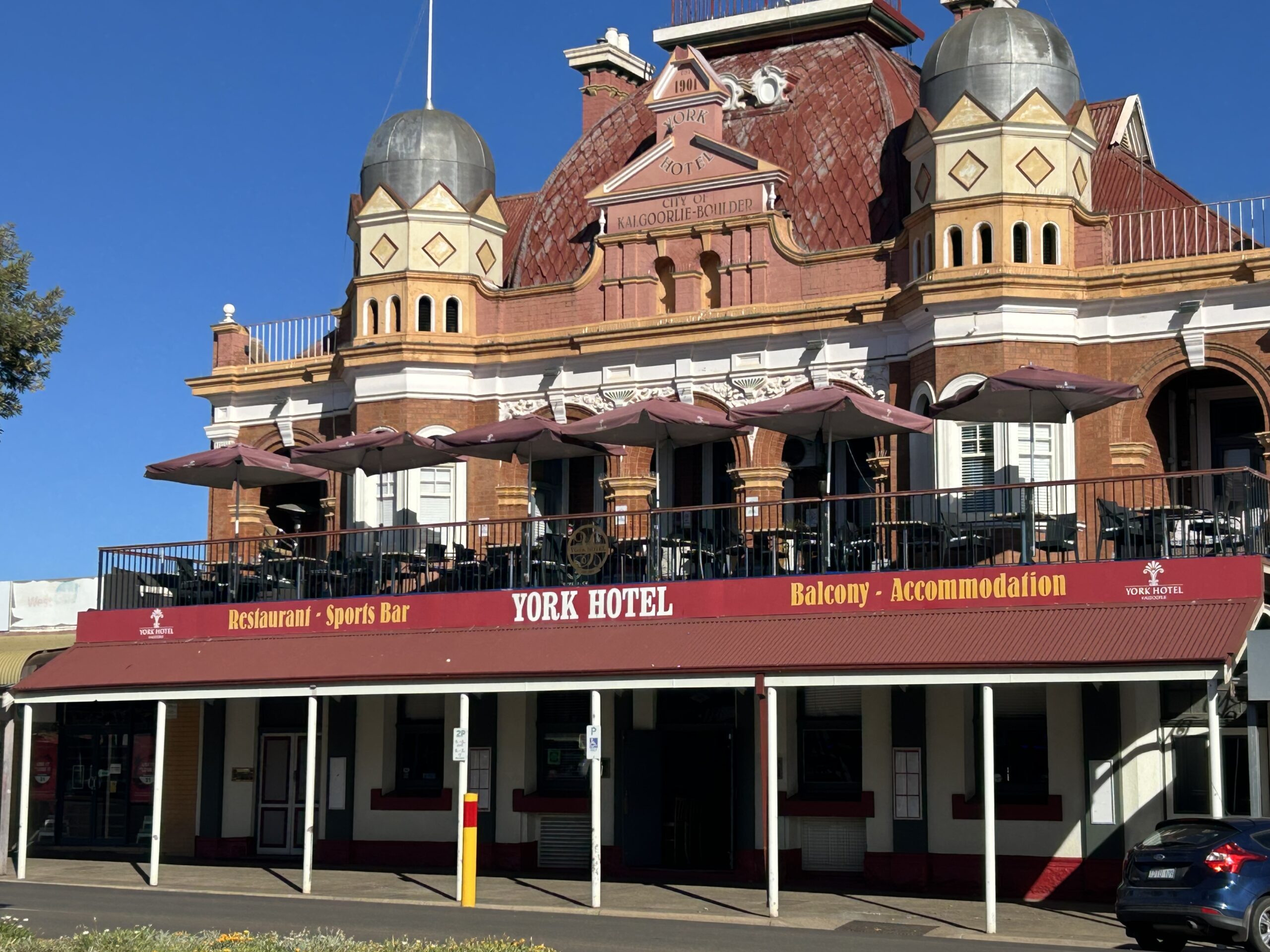
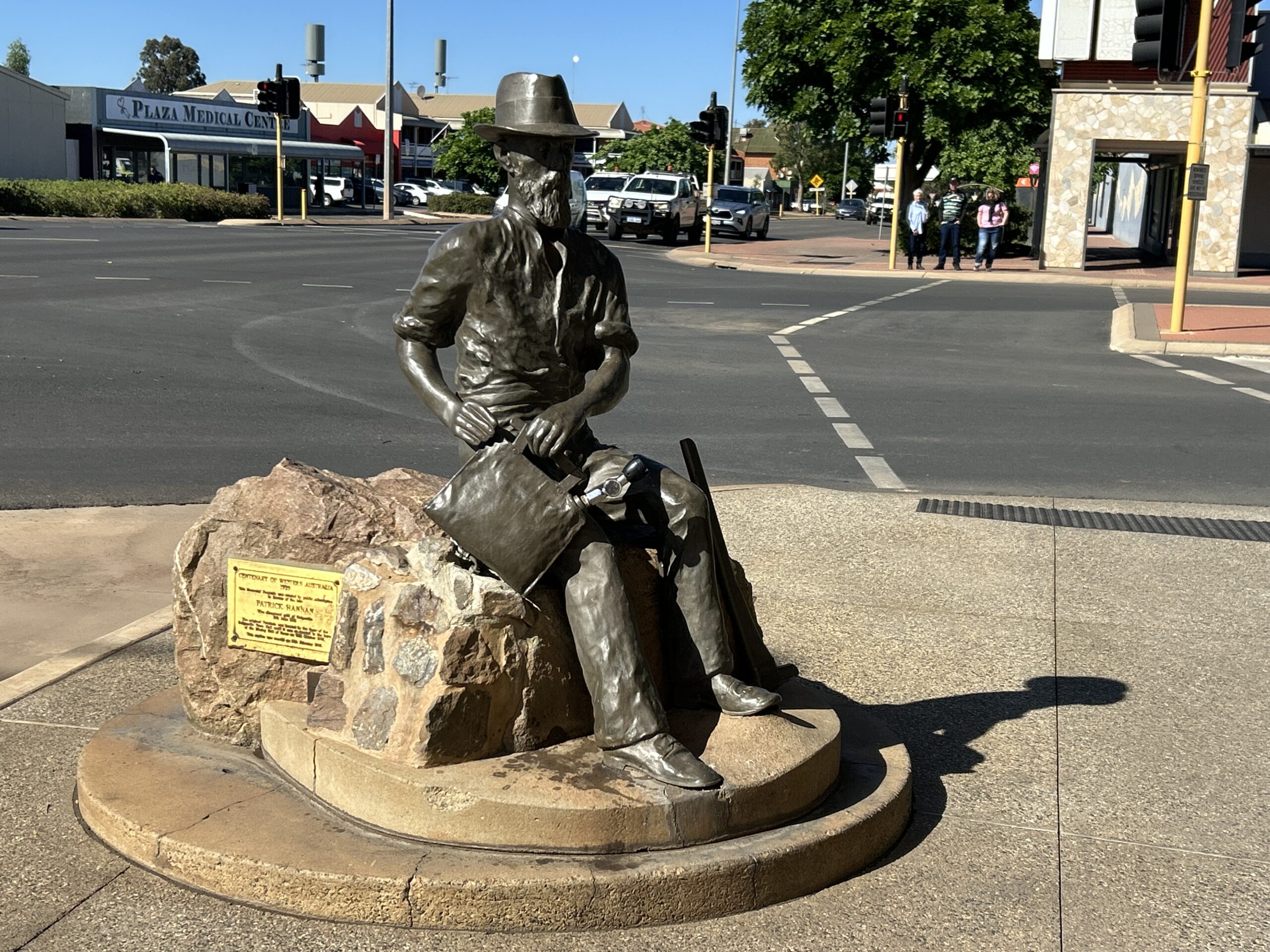
The City of Kalgoorlie-Boulder is Australia’s largest Outback City with a population estimated to be 31,000 people 2024. Kalgoorlie-Boulder is a dynamic and sophisticated regional centre.
Restaurant Prime West Grill Kalgoorlie in house
Accommodation Rydges Kalgoorlie
Day 4 – Kalgoorlie - Leonara
Super Pit, Menzies, Lake Ballard, Leonora, Gwalia, Hoover House
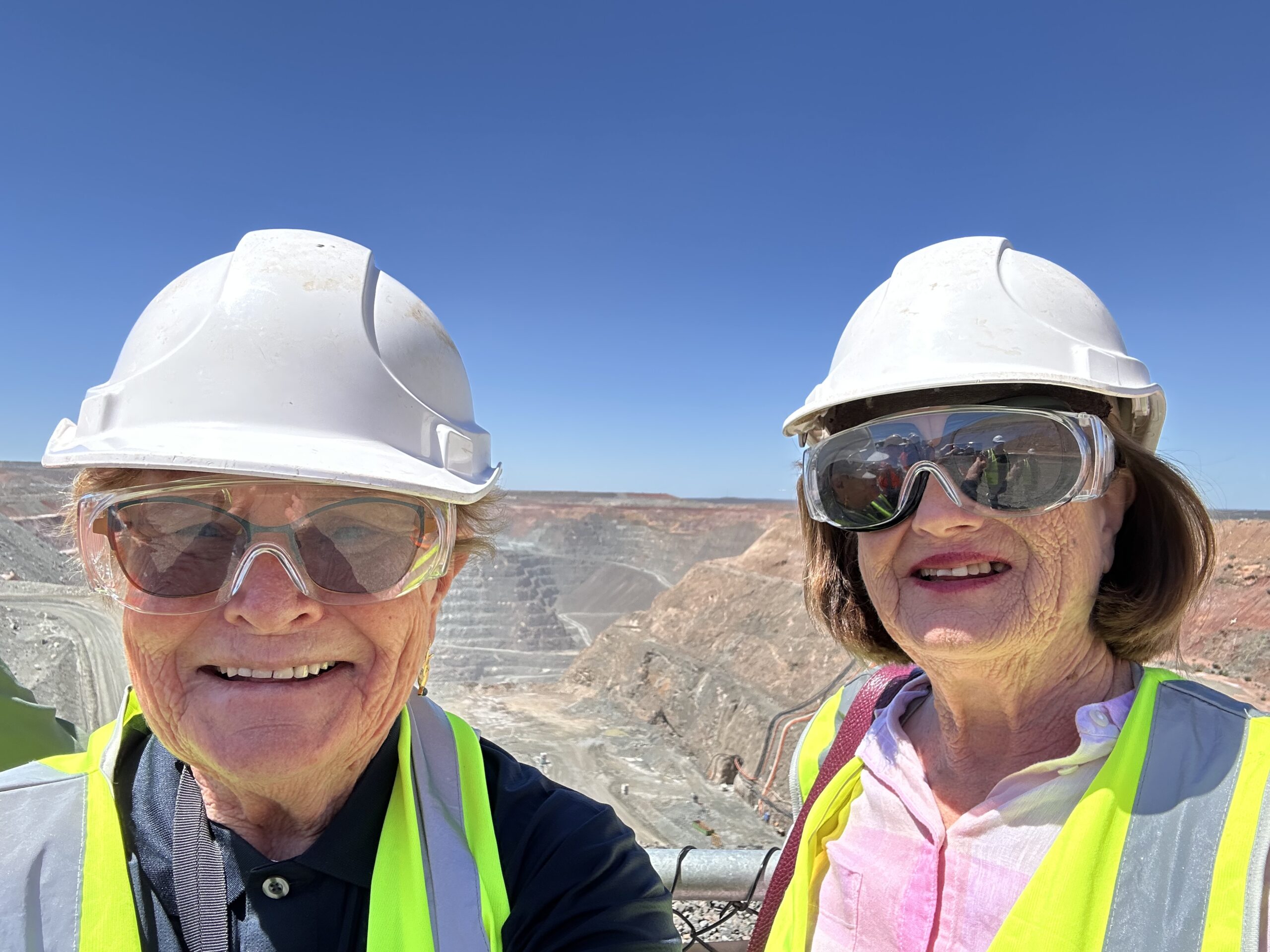
This morning, join a tour of the Super Pit. The Super Pit produces up to 850,000 ounces of gold every year and its operation far outweighs any other mining centre in Australia.
Don high visibility vest and safety glasses and come and experience a tour of Australia’s largest gold producing mine, the Super Pit. You will be visitor inducted to the KCGM Super Pit and view the mining and milling operations through the Fimiston Milling Plant from the safety of the Mine-Spec Bus (Air-conditioned). Visit an outback shed. This is The School of Two Up, and one of only two venues in the entire country where the Aussie gambling game of Two Up can be legally played all year round.
This morning visit Mt Charlotte Water Reservoir and Lookout. Mt Charlotte Water Reservoir is where the water from Mundaring Weir 42 km east of Perth arrives and is distributed all over Kalgoorlie and further afield. The hilltop offers spectacular views over Kalgoorlie, but it also provides a glimpse of the pipeline that allows Kalgoorlie to exist where it does.
As we are leaving the region visit the only legalised Two Up School in Western Australia. The Kalgoorlie Two Up School is in its original corrugated iron shed and bush ring just 10 minutes from Kalgoorlie. Come and see where this iconic Australian pastime grew in prominence.
Two Up has been a traditional gambling game in Australia since it spread around the country with the gold rushes in the second half of the 1800’s.
Enjoy coffee at Menzies local Laurie’s Café and then visit Lake Ballard.
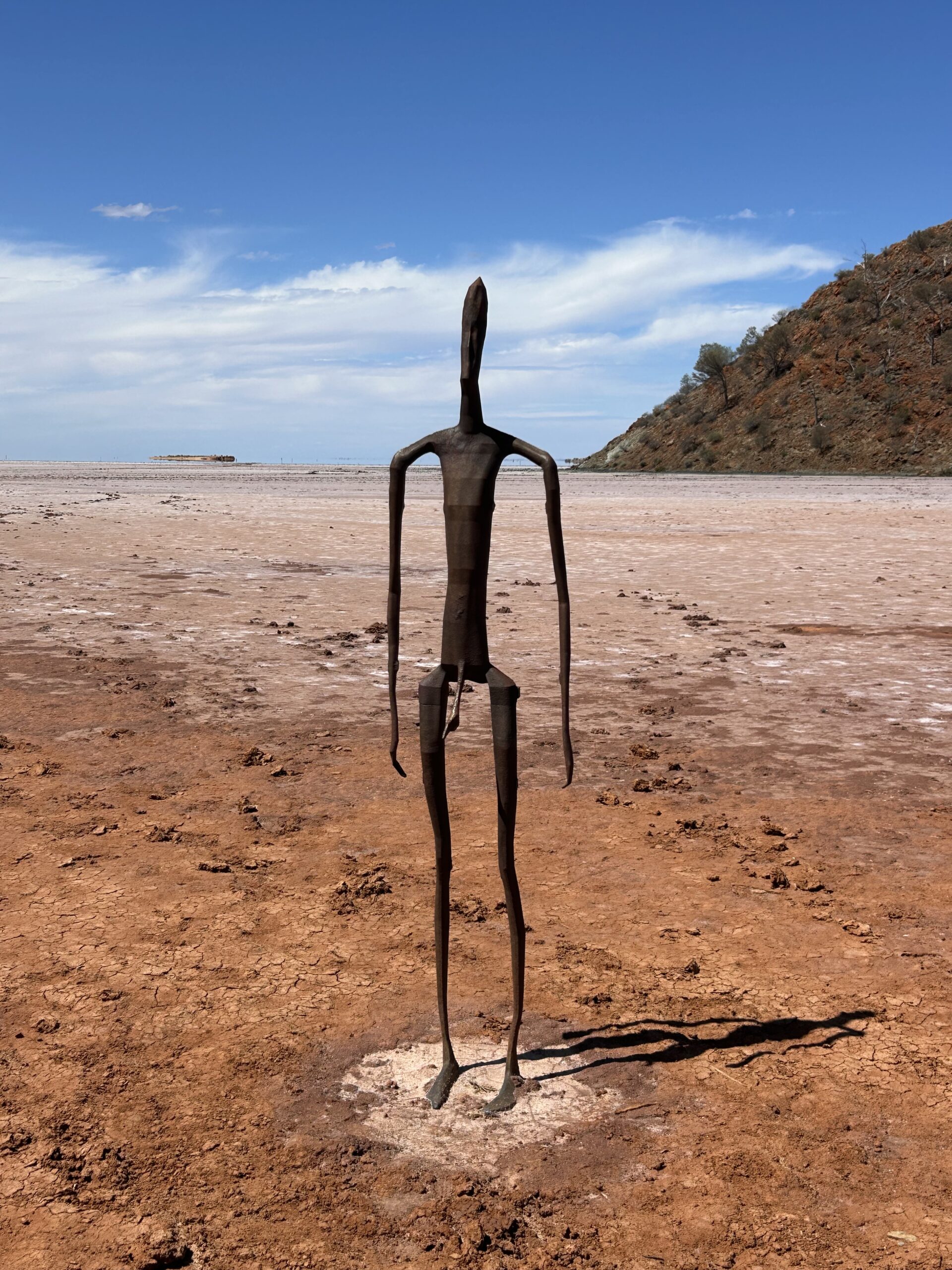
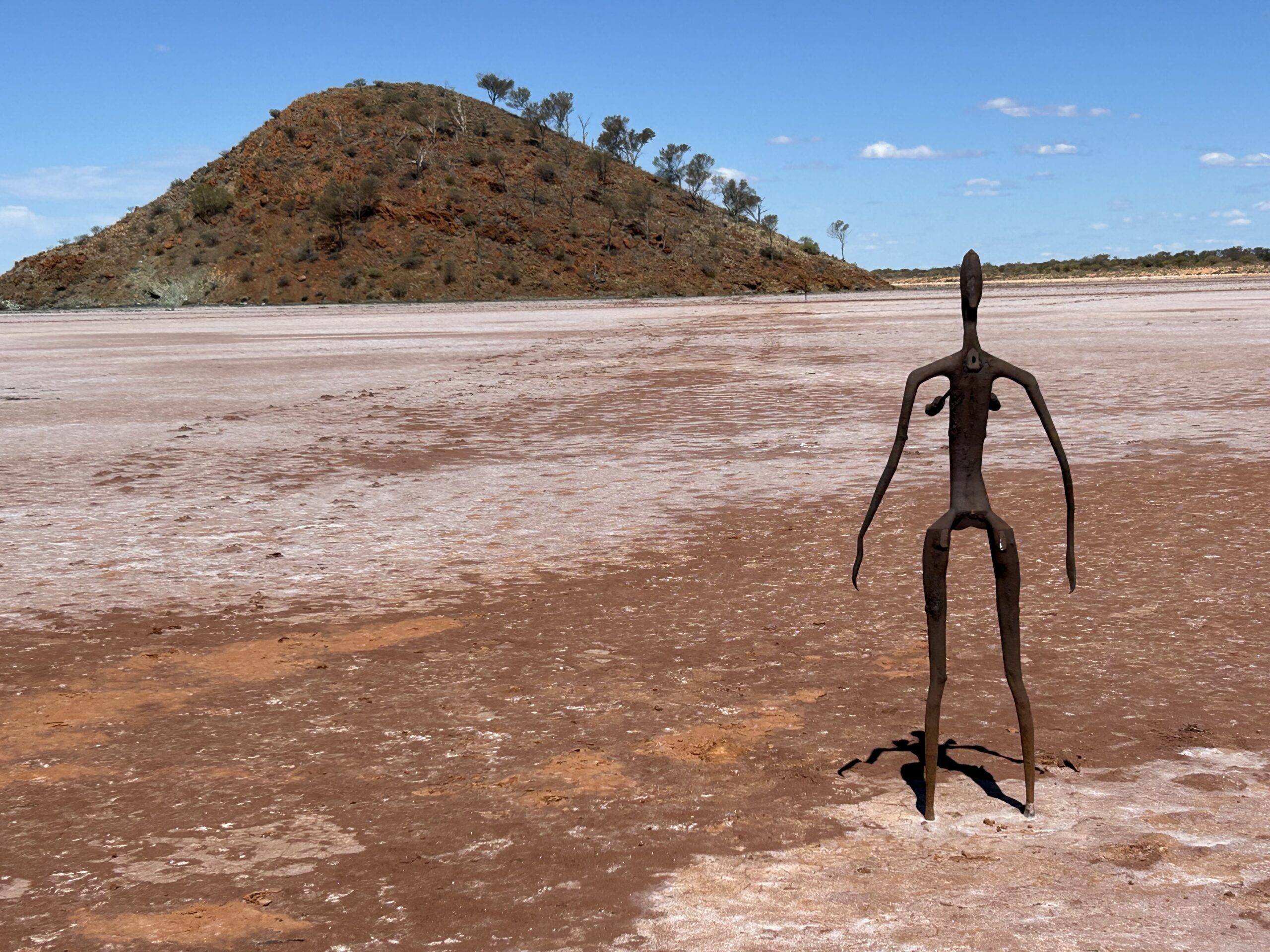
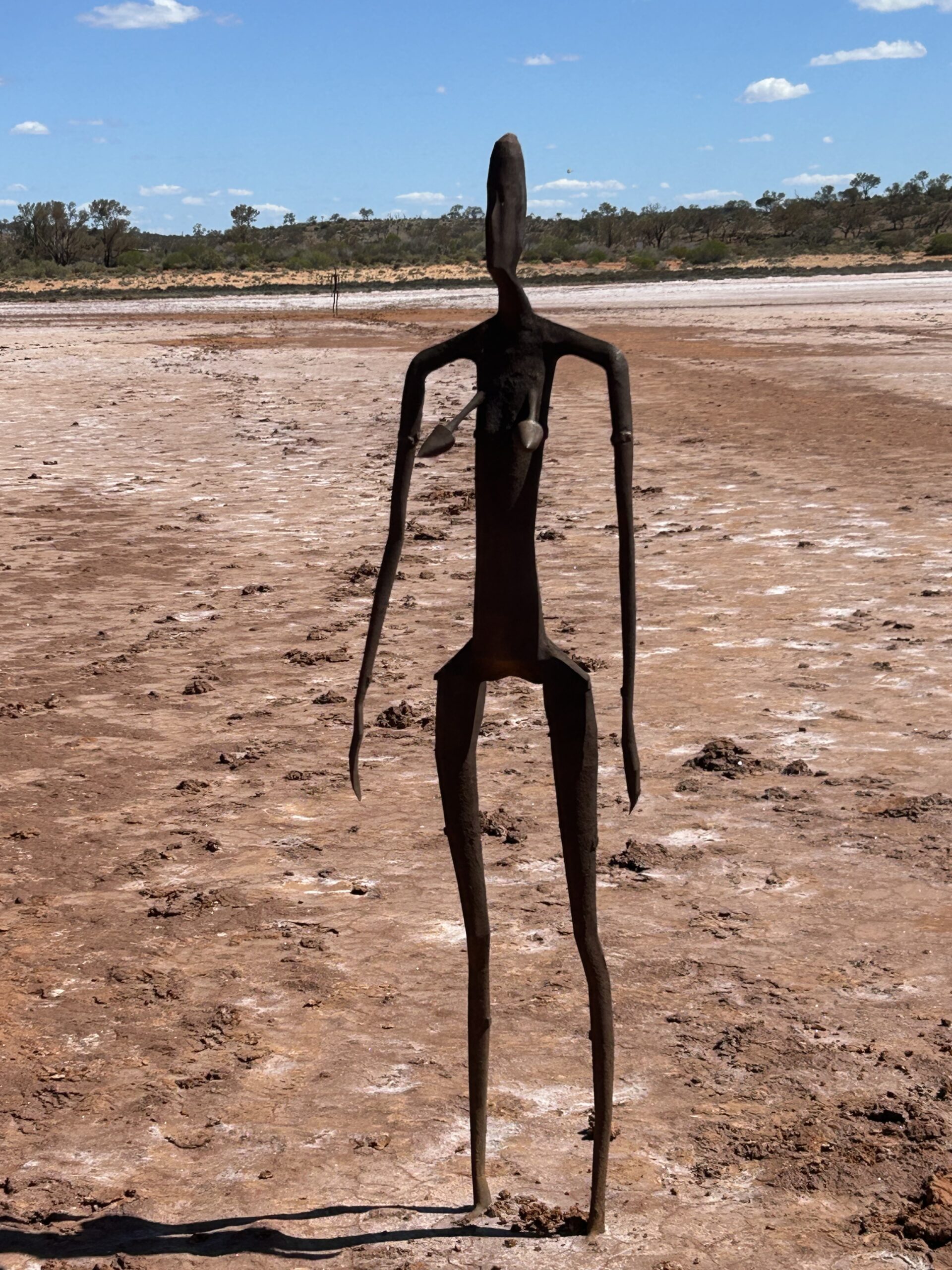
Lake Ballard “Inside Australia Art Instillation” is created by world-renowned artist Antony Gormley s at one of Western Australia’s most unusual and remote cultural attractions – Inside Australia. The artwork is a collection of fifty black steel sculptures standing over 10 square kilometres of the white salt plain of Lake Ballard near the town of Menzies. Each sculpture is one of the 131 residents, whose bodies were scanned for casts.
Leonora Discovered and named in 1869 by the great pioneer of Western Australia, John Forrest, it has a picturesque main street and historic buildings. Surrounding the town are old gold mining centres and cemeteries that are popular with visitors interested in Australian gold rush history and genealogy.
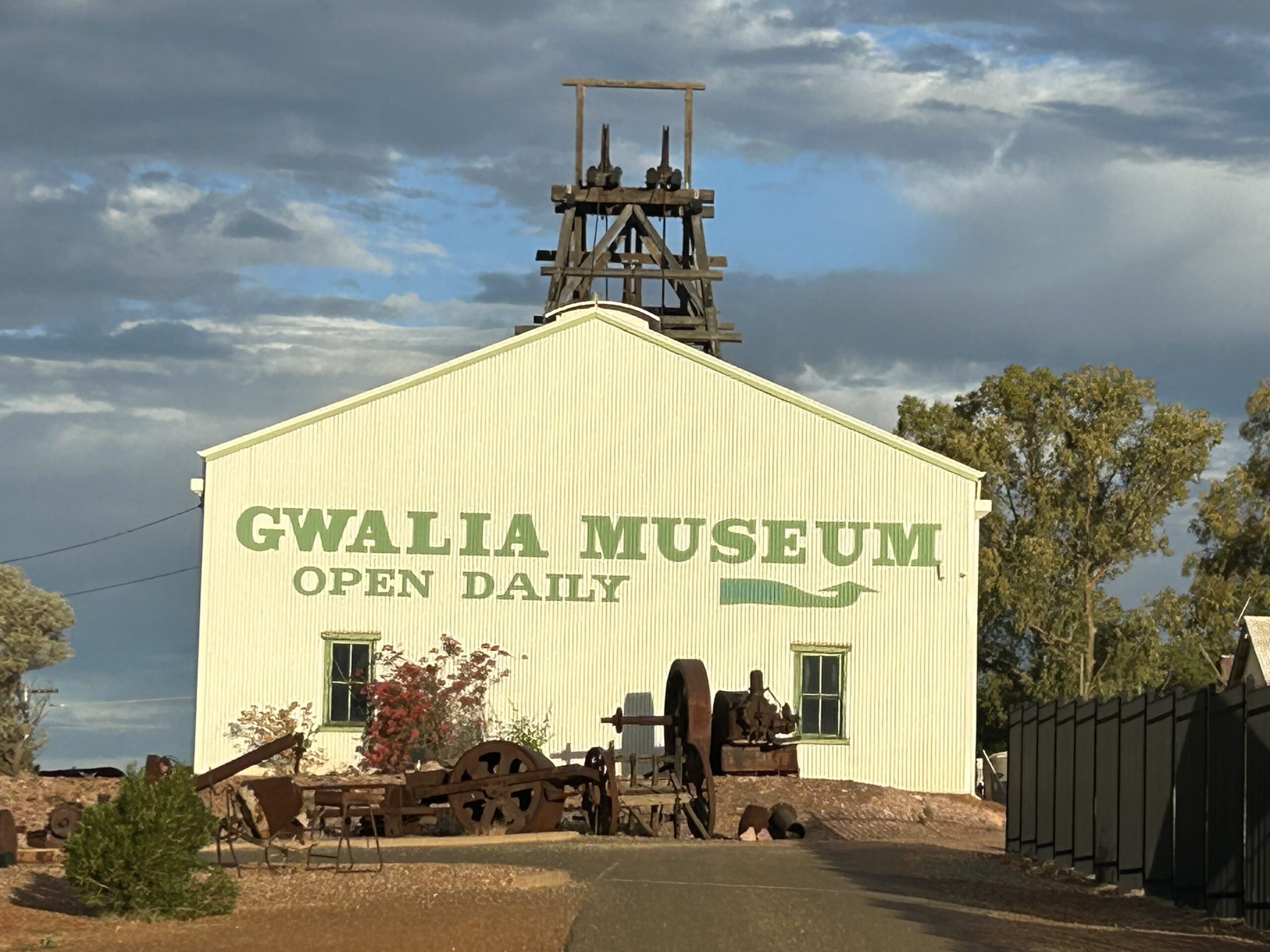
Gwalia The Gwalia Museum is located in former office of the original Sons of Gwalia goldmine. It is well worth a visit before wandering through the deserted homes in the ghost town of Gwalia. The Gwalia has been well preserved and offers an eerie insight into the lives of the former mining community’s residents.
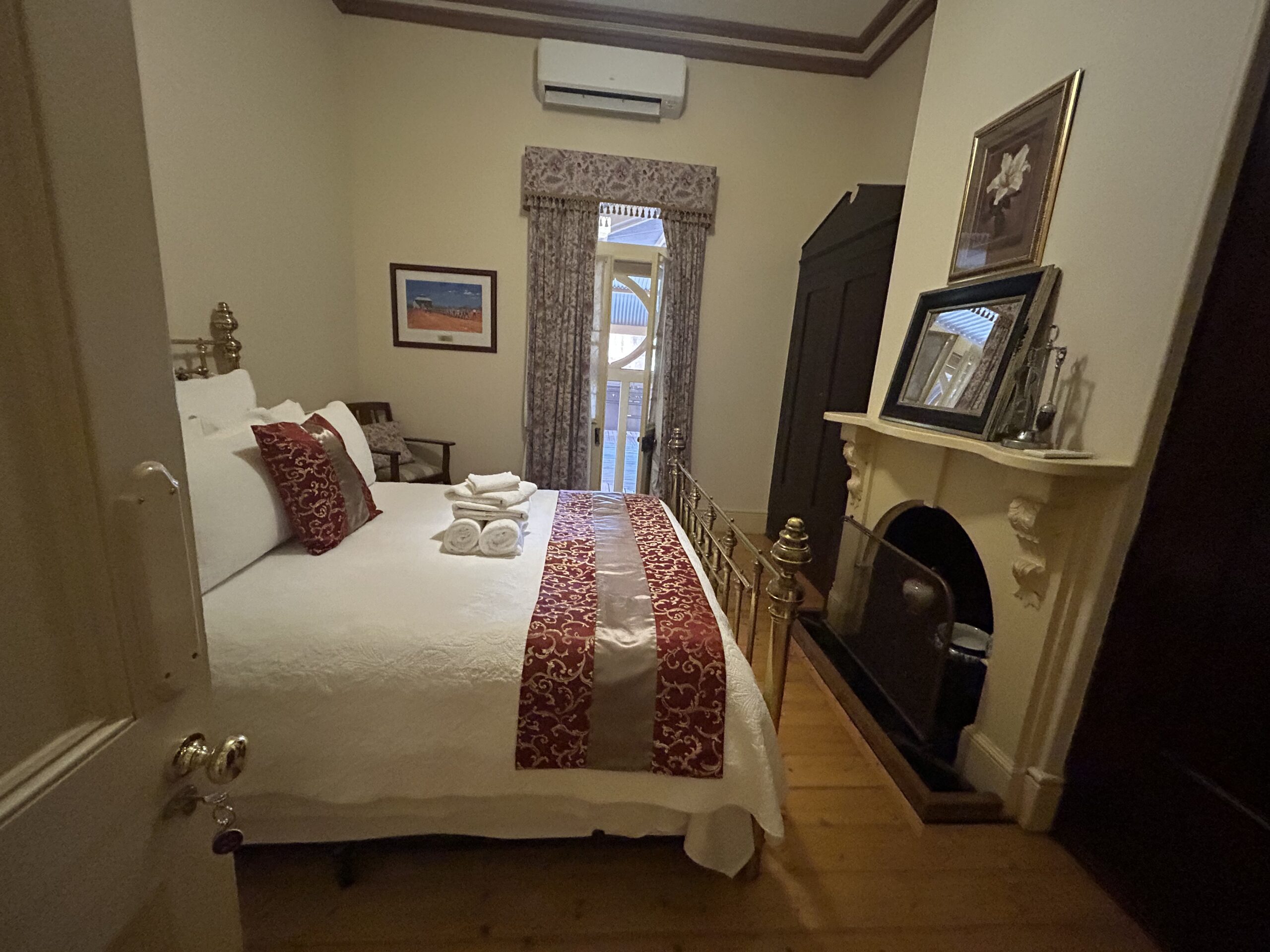
Visit Hoover House B&B, originally built in 1898 as a home for the mine manager. Herbert Hoover who commissioned the house later became 31st President of USA. Hoover House is perched nearby the open Gold Mine Pit and at night see the Gold Ore Trucks with headlights beaming bringing gold to the surface.
Accommodation Hoover House Gwalia
Day 5 – Leinster
Leinster, Sandstone, Mount Magnet, Cue
Leinster was established in 1976 by the Agnew Mining Company as the town for workers for the Nickel Mine of which the main shaft and decline were named Perseverance. The name of the town is derived from the Pastoral Lease – Leinster Downs Station which was established in the early 1900s and on which the mine and town are situated.
Mining in the region began almost a century earlier with the discovery of gold in 1892 by Julius Anderson. Two years later Paddy Lawler’s prospecting party discovered gold at Lame Horse Soak .
The Brewery in Sandstone was constructed in 1907 by Irishman JV Kearney, to provide for the demands of the many miners then working in the area. It was built on top of a breakaway, close to where the cliff drops some 30-40 feet. k. The Great Eastern and Donegal leases were also pegged in 1894.
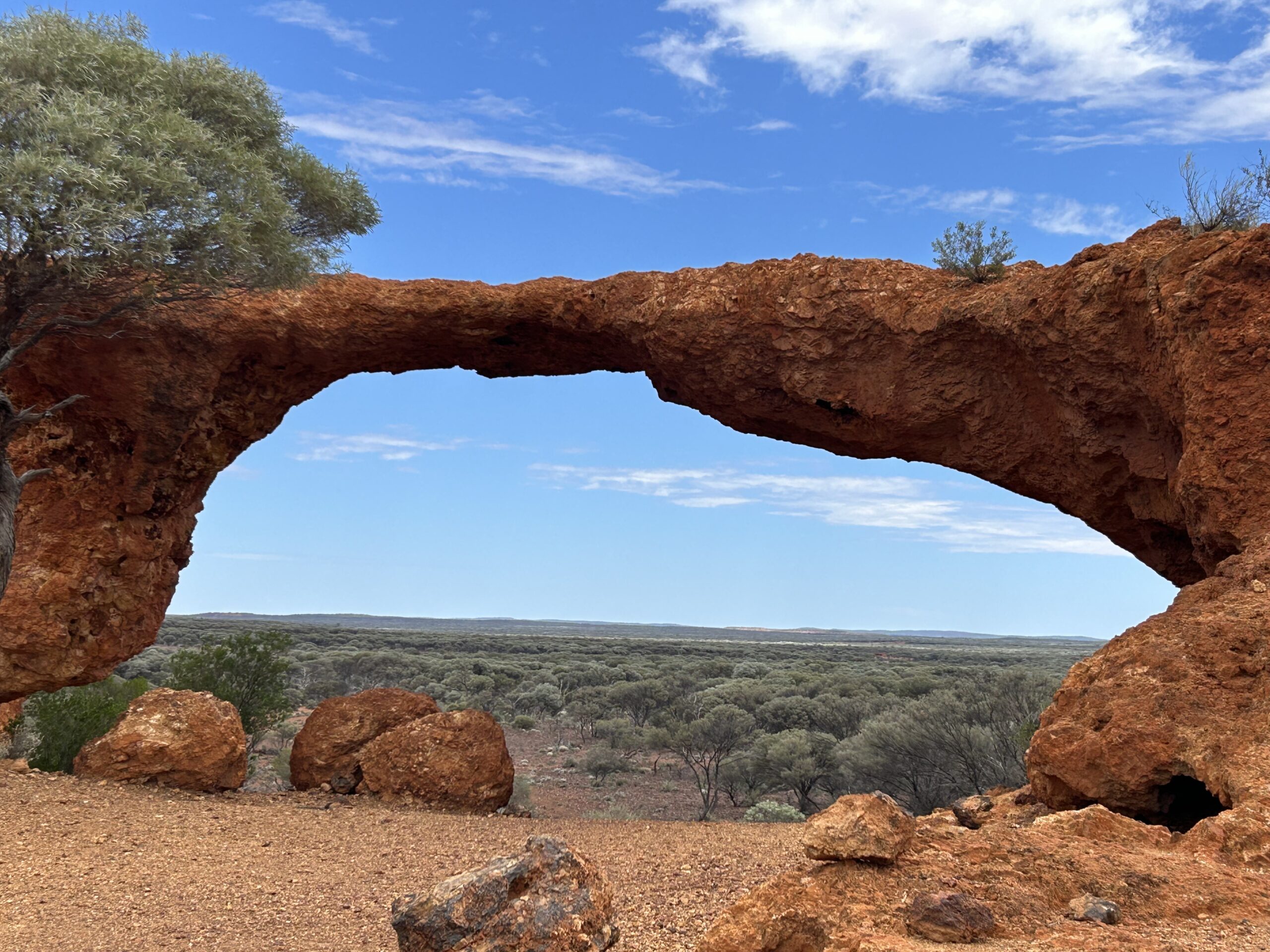
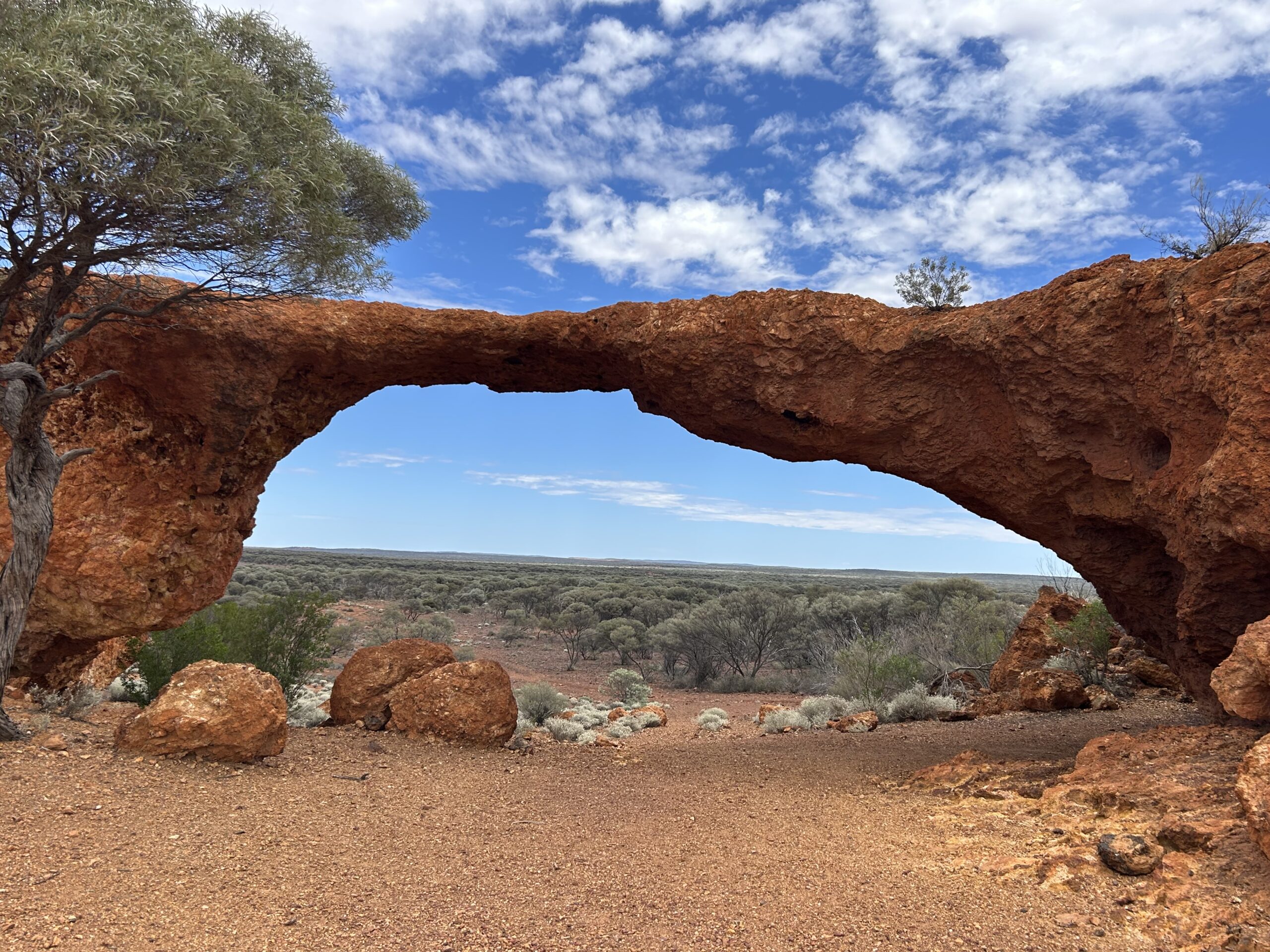
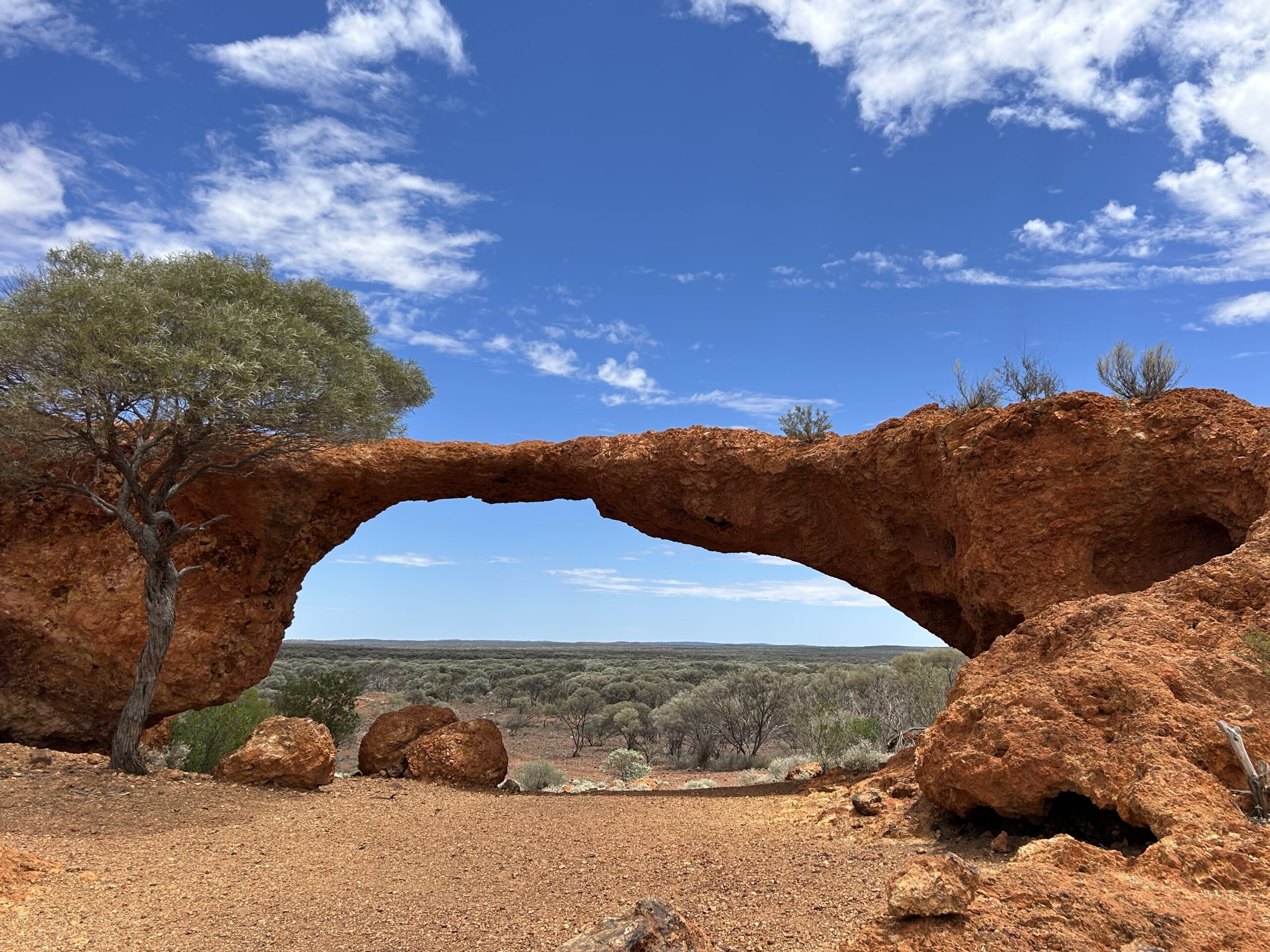
London Bridge, a prominent attraction in Sandstone, is part of a larger formation about 800 metres long, varying in height from around 3 to 10 metres. It is formed of weathered basalt, and the rock is believed to be about 350 million years old.
London Bridge is Falling Down, unfortunately with time the bridge is getting thinner and will eventually fall.
For over 100 years London Bridge has been a popular lookout spot in Sandstone. In the 1900’s it was frequented as a spectacular town picnic site and still is today. It is estimated the rocks of the Sandstone belt are close to 2 billion years old.
Mount Magnet is a townsite in the Murchison goldfields. Gold was discovered in the Mount Magnet area in July 1891 by the prospectors George Woodley and Tom Sampey. By late 1893 there was enough interest in the area for the government to consider declaring a townsite, and the survey was carried out in 1894 and the townsite gazetted in 1895.
Mount Magnet is named after the nearby hill of the same name. The hill was named by the explorer Robert Austin in 1854, in consequence of the magnetic properties of the rocks on its summit. The Aboriginal name of the hill isWarramboo Visit Warramboo Lookout to test the magnetic variations.
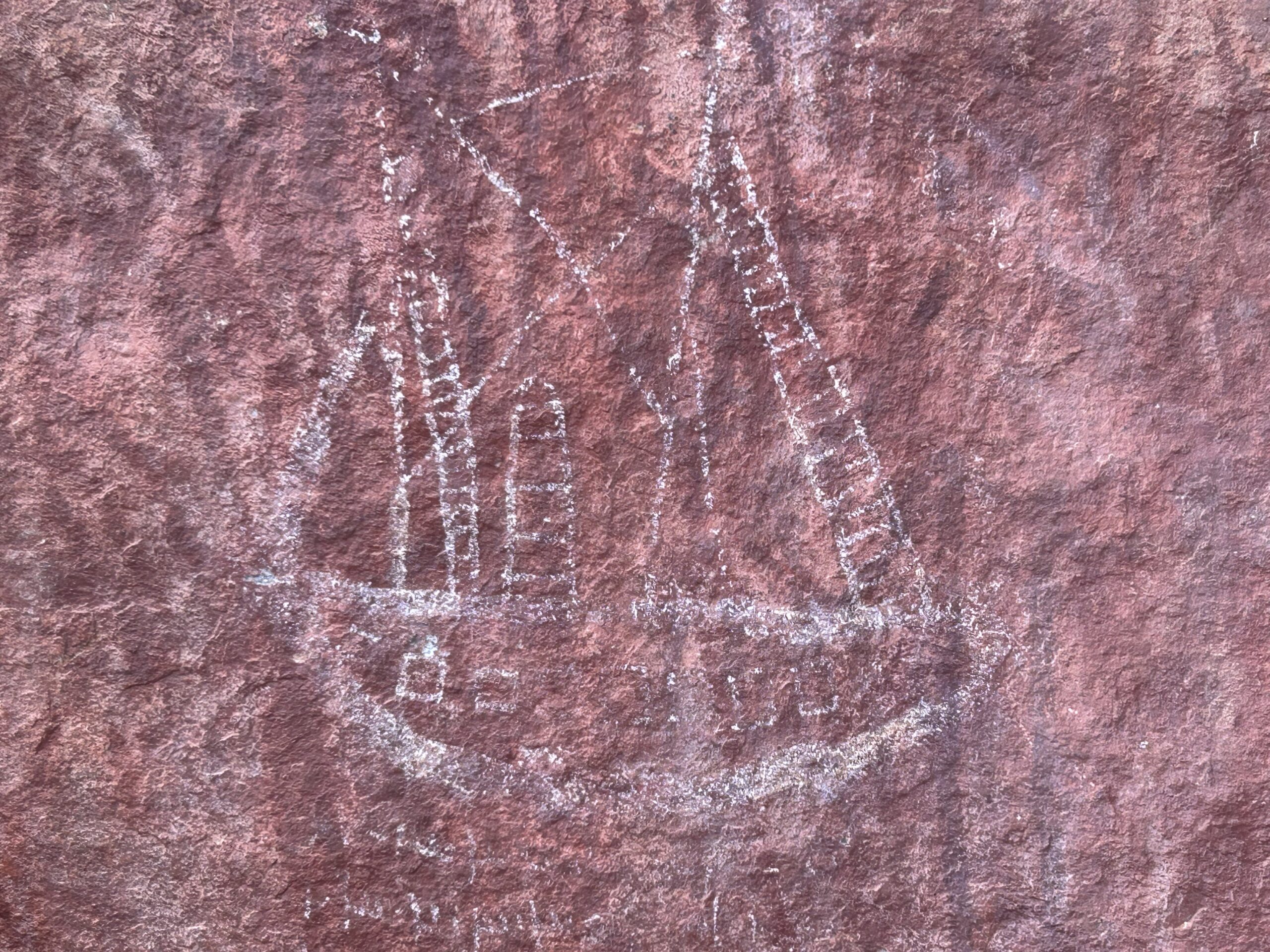
The Granites are a significant Aboriginal rock art site, 7 kilometres north of Mount Magnet. It is a place of strong cultural significance to the Badimia tribe. Take the opportunity to view striking Aboriginal art which has been dated 9,000 years old and is scattered amongst the granite boulders.
Many Cue’s buildings still stand proudly as tributes to their 1890s gold rush heritage, classified by the National Trust and still serving their original purpose. Take a walk by the government buildings, post office, courthouse and police station. Visit the old gentleman’s club, which now serves as the shire office and houses an impressive photographic collection portraying Cue’s past. Experience a turn-of-the-century shopping trip to Bell’s Emporium. Or drop in for a drink with the locals at the Cue Hotel.
Accommodation Queen of the Murchison
Need to be able climb a flight of stairs to the accommodation with shared bathrooms.
Day 6 – Walga Rock
Walga Rock, Meekatharra, Mount Augustus
Leinster was established in 1976 by the Agnew Mining Company as the town for workers for the Nickel Mine of which the main shaft and decline were named Perseverance. The name of the town is derived from the Pastoral Lease – Leinster Downs Station which was established in the early 1900s and on which the mine and town are situated.
Mining in the region began almost a century earlier with the discovery of gold in 1892 by Julius Anderson. Two years later Paddy Lawler’s prospecting party discovered gold at Lame Horse Soak .
The Brewery in Sandstone was constructed in 1907 by Irishman JV Kearney, to provide for the demands of the many miners then working in the area. It was built on top of a breakaway, close to where the cliff drops some 30-40 feet. k. The Great Eastern and Donegal leases were also pegged in 1894.
London Bridge, a prominent attraction in Sandstone, is part of a larger formation about 800 metres long, varying in height from around 3 to 10 metres. It is formed of weathered basalt, and the rock is believed to be about 350 million years old.
London Bridge is Falling Down, unfortunately with time the bridge is getting thinner and will eventually fall.
For over 100 years London Bridge has been a popular lookout spot in Sandstone. In the 1900’s it was frequented as a spectacular town picnic site and still is today. It is estimated the rocks of the Sandstone belt are close to 2 billion years old.
Mount Magnet is a townsite in the Murchison goldfields. Gold was discovered in the Mount Magnet area in July 1891 by the prospectors George Woodley and Tom Sampey. By late 1893 there was enough interest in the area for the government to consider declaring a townsite, and the survey was carried out in 1894 and the townsite gazetted in 1895.
Mount Magnet is named after the nearby hill of the same name. The hill was named by the explorer Robert Austin in 1854, in consequence of the magnetic properties of the rocks on its summit. The Aboriginal name of the hill isWarramboo Visit Warramboo Lookout to test the magnetic variations.
The Granites are a significant Aboriginal rock art site, 7 kilometres north of Mount Magnet. It is a place of strong cultural significance to the Badimia tribe. Take the opportunity to view striking Aboriginal art which has been dated 9,000 years old and is scattered amongst the granite boulders.
Many Cue’s buildings still stand proudly as tributes to their 1890s gold rush heritage, classified by the National Trust and still serving their original purpose. Take a walk by the government buildings, post office, courthouse and police station. Visit the old gentleman’s club, which now serves as the shire office and houses an impressive photographic collection portraying Cue’s past. Experience a turn-of-the-century shopping trip to Bell’s Emporium. Or drop in for a drink with the locals at the Cue Hotel.
Accommodation Queen of the Murchison
Need to be able climb a flight of stairs to the accommodation with shared bathrooms.
Day 7 – Mt Ausgustus to Carnarvon
Mt Augustus, Kennedy Ranges, Gascoyne Junction, Carnarvon
Today we depart Mt Augustus for yet more incredible sights as we drive across to Carnarvon. Refuel at the tourist park before we go.
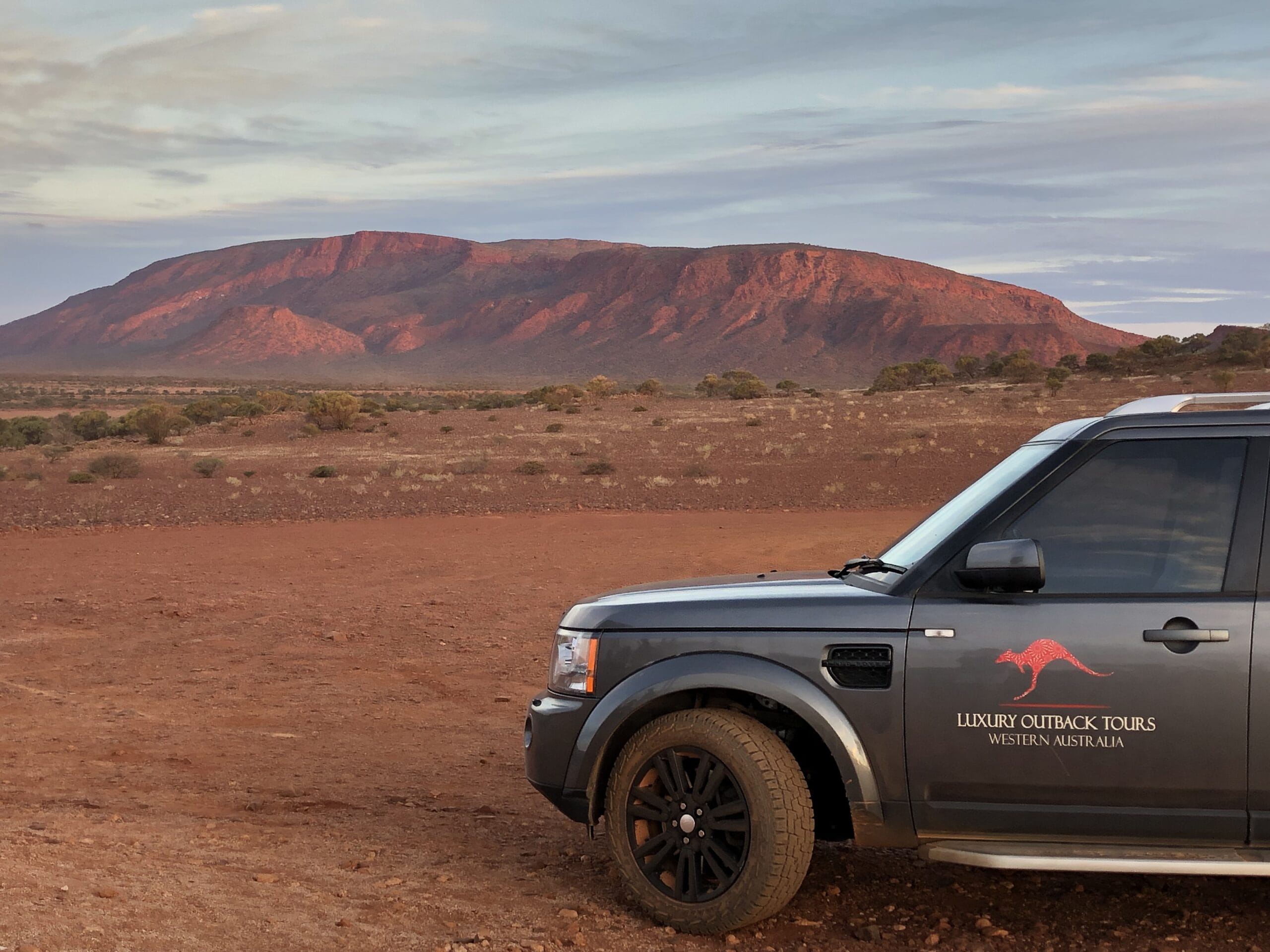
We take a drive around the perimeter of Mt Augustus to truly understand the size of this little known rock.
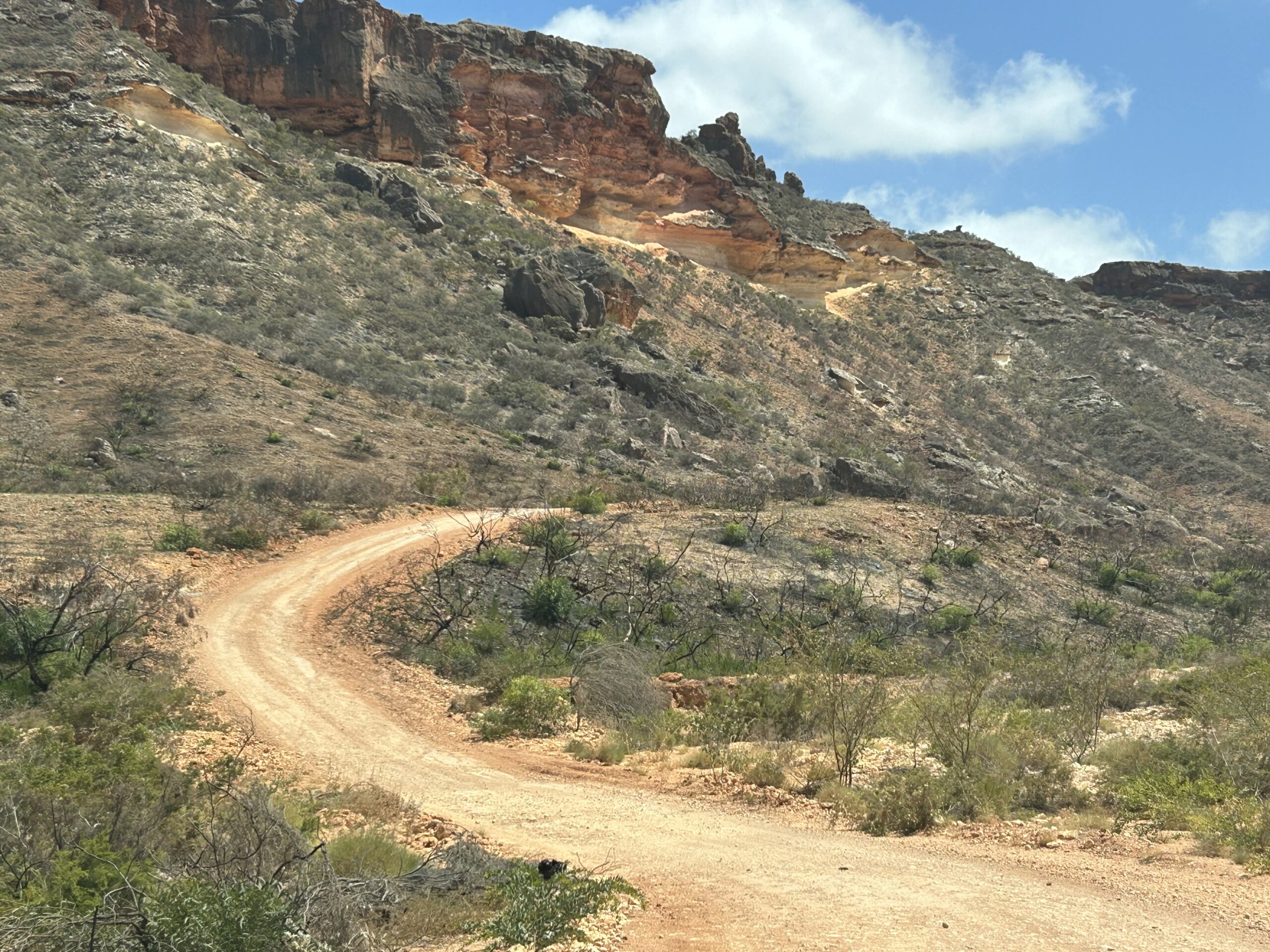
The road to Kennedy Range National Park heads west towards the Australian coastline, the exquisite Kennedy Range is one of Australia’s most underrated sights. With a magnificent cliff face that extends for several kilometres, which looks like the result of a giant serrated knife.
Visit Honeycomb Gorge is the park’s most popular spot, you will reward you with the unusual sight of this enormous gorge, with walls pockmarked like honeycomb. While here, you may spot the area’s distinctive Dawson’s burrowing bees – these lovely native creatures can be found buzzing about the small pool at Honeycomb gorge between July and September.
Gascoyne Junction is a small town on the junction of the Gascoyne River and Lyons River.
Following the original trail blazed by transport pioneer Charles Kingsford Smith along the Kingsford Smith Mail Run. Re-live the adventures of the early pastoral pioneers and Afghan hawkers along the Wool Wagon Pathway. Both routes explore the region’s rich Indigenous heritage and Dreaming stories in a series of interpretive signs.
Carnarvon, a regional hub that provides essential services to the surrounding areas. The township lies at the mouth of the Gascoyne River and supports horticultural and fishing industries.
Carnarvon is referred to as the ‘food bowl’ of Western Australia, producing 80% of the state’s total fruit and vegetable crops and much of its seafood, with a thriving prawn, scallop, crab and fishing industry.
Fun Fact: Carnarvon was the first location in Australia where bananas were grown! The first recorded arrival of bananas in Australia was in the early to mid-1800s planted by Chinese migrants. The banana industry in Carnarvon really got underway with a small planting in the 1940s.
Accommodation Carnarvon Hospitality Inn
Day 8 – Carnarvon to Coral Bay
Manilya Roadhouse, Coral Bay
We visit the Carnarvon One Mile Jetty Heritage Precinct. The One Mile Jetty was built in 1897 and was the first port in Australia to transport commercial livestock by sea on a regular basis. State ships stopped in Carnarvon on average twice a week until they ceased operations in 1966.
Carnarvon’s Number 1 Tourist Destination the Carnarvon Space & Technology Museum.
The Carnarvon Space and Technology Museum celebrates the little known history of the role Carnarvon played in the manned space program and in the Australian communications industry.
The museum focusses on two parts. The Carnarvon Tracking Station and the OTC Satellite Earth Station, for which each station played separate roles in the early space industry.
The Carnarvon Tracking Station was located ten kilometres south from Carnarvon. The station was built to support NASA’s Gemini, Apollo and Skylab programs and commissioned in 1964 and operated for 11 years. It was the last station to communicate with the space capsules leaving the earth orbit, and the last to make contact before splashdown in the Pacific Ocean. At the height of the operation, it had a staff of 220 people.
The OTC Satellite Earth Station and now the museum site is situated at the northern end of Browns Range, about six kilometres from the centre of Carnarvon, and four kilometres north of the Tracking Station. The OTC Satellite Earth Station opened in1966, initially with the 12.8 metre wide Casshorn antenna as part of the global satellite communications system. The Casshorn antenna has interacting parabolic and hyperbolic reflectors in a characteristic ‘sugar scoop’ form. An interesting place to visit and relive memories.
On 21 July 1969, the day of the Apollo 11 moon landing, the Casshorn antenna relayed Neil Armstrong’s first steps on the Moon from NASA’s Honey Suckle Creek Tracking Station to Perth’s TV audience via Moree earth station – the first live telecast into Western Australia. Later in 1969, the larger 29.6 metre wide steerable antenna was built to facilitate better communication between the NASA Tracking Station and the USA.
Visit a unique Cactus Garden flourishing in Carnarvon’s tropical climate. The garden has attracted Instagram followers. The sub-tropical oasis is Rob Westcott’s dream with the first cacti planted 15 years ago. Today there are over 350 cactus plants available for viewing in all their wonderful and colourful splendour, some tower over five metres tall!
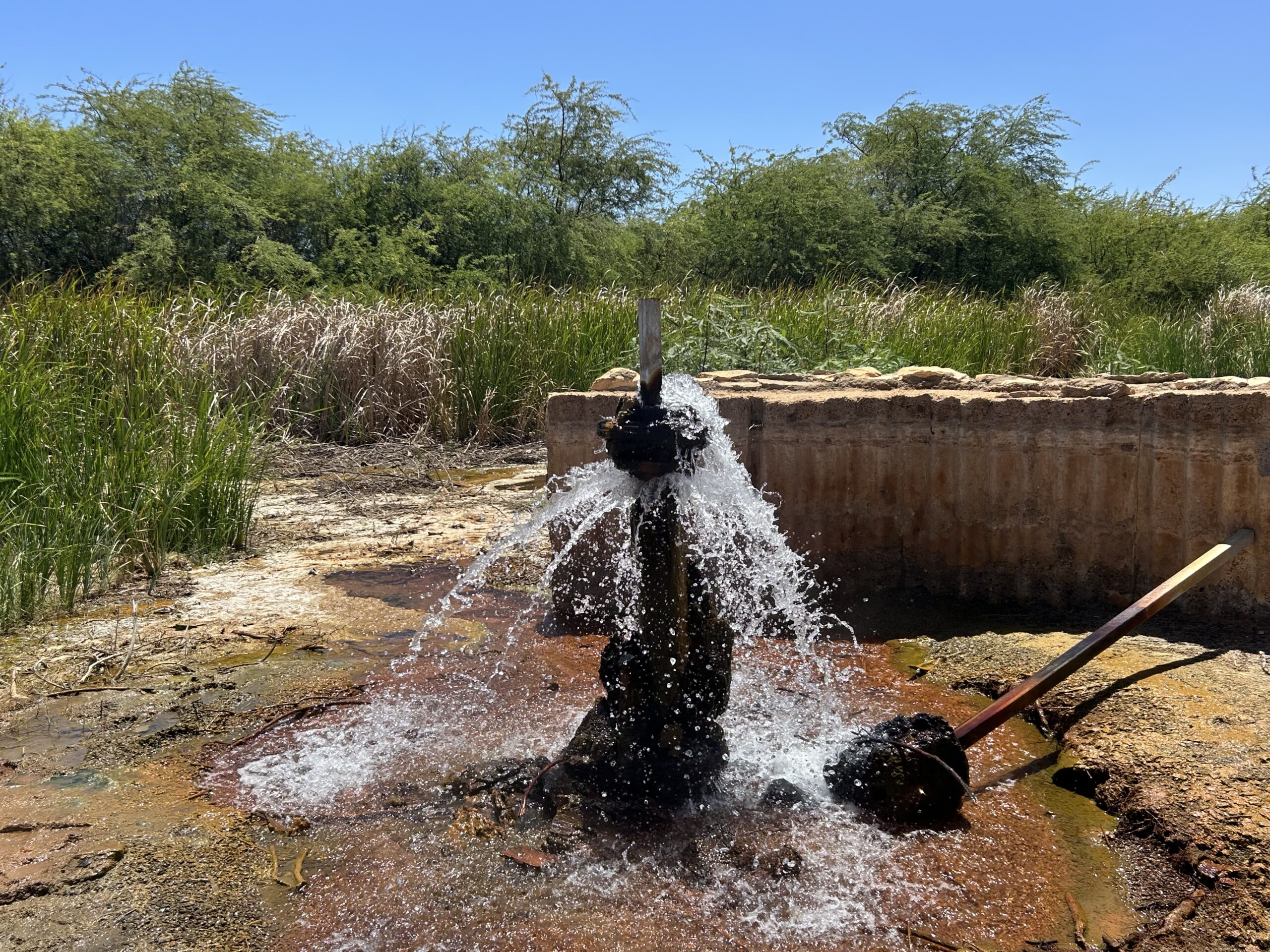
Visit the Bibbawarra Bore an unusual sight. The artesian bore is 914metres deep and hot water gushes out at 97,741 litres (21,500 gallons) an hour. The temperature of the water 68 degrees Celsius.
Stock troughs were built in the 1940s to transport the water along the stock route for the sheep and cattle. It was funded in part by the Boolathana Pastoral Company and a government grant. The water travelled along the 175-metre-long trough, cooling as it flowed along it. This meant by the time it reached the sheep and cattle it was cool enough to drink. The trough was the longest in the Southern Hemisphere.
Take a break at Minilya Bridge Roadhouse and on to Coral Bay our overnight stay.
Accommodation Ningaloo Coral Bay Bayview Villas walk across the road to the beach for a snorkel or swim
Day 9 – Ningaloo
Glass bottom boat cruise, Charles Knife Gorge, Cape Range
The UNESCO Ningaloo Coast World Heritage Area was established in 2011 and is regarded as one of the last great ocean paradises. The area was listed due to its marine and terrestrial assets including rare flora and fauna, including the Whale Shark with 300 to 500 of these megafauna gathering at Ningaloo annually.
The Ningaloo Reef is one of the longest near-shore reefs in the world and Australia’s largest fringing reef system, stretching 300 kilometres from Red Bluff going north along the coast to Muiron Islands the north and Bundegi Beach east in the Exmouth Gulf.
After a leisurely breakfast, experience a glass bottom boat and snorkeling cruise on the Ningaloo Reef. Not only will you see the reef passing by under the glass, but you will also get the chance to snorkel at two beautiful locations.
A highlight is to see the large coral formation known as Ayres Rock. Immerse yourself amongst hundreds of tropical fish and view magnificent coral gardens in this underwater wonderland.
After lunch, we tour to Exmouth and visit the Charles Knife Gorge for fabulous views of Exmouth Gulf.
Enjoy a drive on the top of Cape Range with deep gullies and gorges dropping away below us. We end the day at the historic Wapet Oil Well No. 3 site before arriving at Exmouth for the evening.
Exmouth
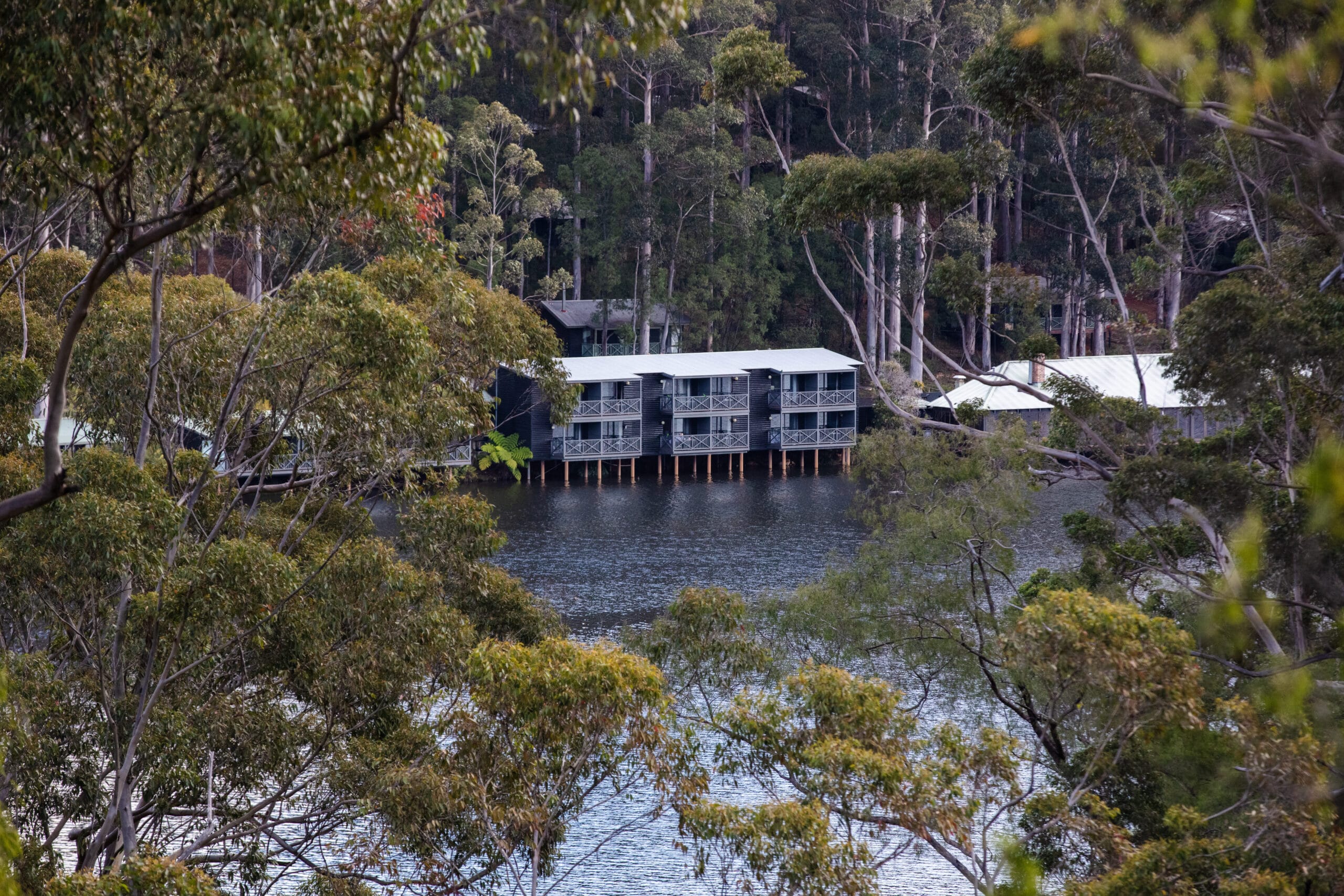
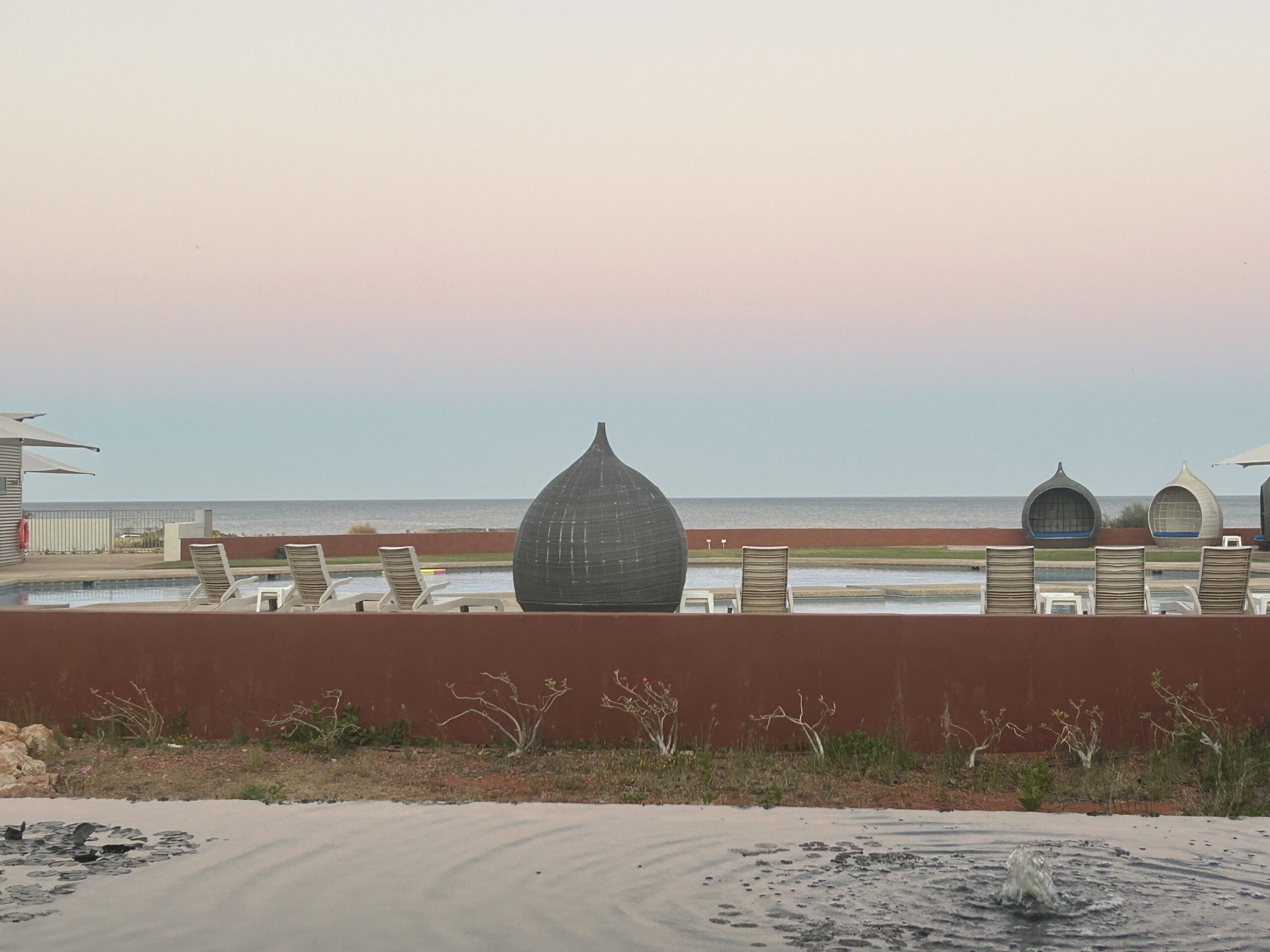
Accommodation Mantarays Ningaloo Resort Three Night Stay
Day 10 – Exmouth and Cape Range
Exmouth Vlamingh Head Lighthouse, Yardie Creek Cruise
Spend today enjoying all the highlights of Exmouth region, including a drive along the Ningaloo Reef side of Cape Range National Park to visit scenic sights.
As we are driving out of town you will see a very large landmark, the Harold E Holt Naval Communication Station, you will not be able to miss Tower Zero, which is one of the largest towers in the southern hemisphere.
The naval station played an important role during World War II. It was the base for passing messages between Australian and United States’ command centres and their ships and submarines.
First stop is the Vlamingh Head Lighthouse and lookout which offers spectacular views along the coastline, Exmouth and the Naval Communication Station Harold E. Holt.
Continue to join 11 am cruise at Yardie Creek. View the stunning gorge walls, unique flora and fauna, and hear the local aboriginal history and the beautiful natural environment.
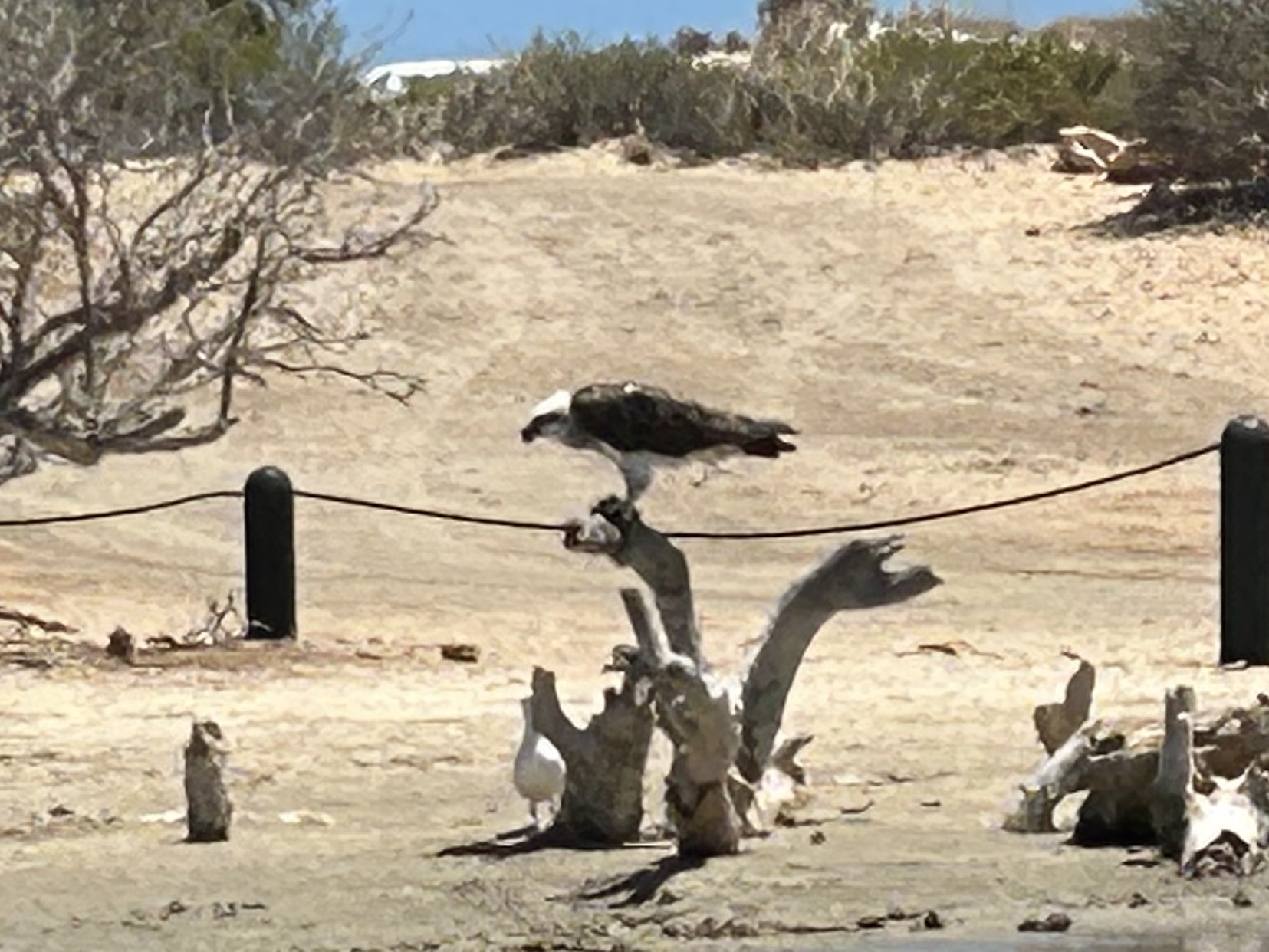
A highlight is spotting the endangered black footed rock wallabies cape range. Yardie Creek is a mecca for eco tourists seeking a pristine, natural, and isolated place that is home to abundant wildlife which includes corellas, ospreys, ocean fish that have become locked in by tides and or cyclones.
After a picnic lunch, we head off to visit Milyering Discovery Centre and later paddle in the crystal clear water at the famous Turquoise Bay. Witness many inquisitive fish swimming around you and visit other bays along the way back to Exmouth.
Accommodation Mantarays Ningaloo Resort
Day 11 – Exmouth
Exmouth area Sightseeing or this day can be swapped for a Whale Shark Swim
Pickup 7 am and return 3.30pm approximately fees apply
Shothole Canyon, The SS Mildura wreck, Bundegi Beach
The road into Shothole Canyon is 4WD access only located off Minilya-Exmouth Road, 14kms south of Exmouth. Shothole Canyon was named after the shot holes left by seismographic charge explosions during oil searches in the Cape Range during the 1950s. Shothole Canyon offers close examination of the colourful, fossil laden rock layers of the sheer canyon walls. At the end of the road, there is a picnic area and short walking trail.
The intriguing sight of the shipwreck of SS Mildura can be seen from the tip of North West Cape.
The SS Mildura was a cattle steamer, wrecked in 1907 during a cyclone. Most of the remains were salvaged and used for renovations and the hull was used for bombing practice in World War II.
The remains of the SS Mildura now rest only 80 metres from shore and are best viewed on a low tide.
In 1967, at the height of the Cold War, the Australian-United States alliance established Exmouth to strengthen strategic operations in the Indian Ocean. With the US military descending on the RAAF Base Learmonth, so too came traces of Uncle Sam: green money, bowling alleys, a baseball field, and American cars cruising Exmouth’s few streets.
Visit Bundegi Beach for a walk on the beach
Accommodation Mantarays Ningaloo Resort
Day 12 – Exmouth to Perth
The road into Shothole Canyon is 4WD access only located off Minilya-Exmouth Road, 14kms south of Exmouth. Shothole Canyon was named after the shot holes left by seismographic charge explosions during oil searches in the Cape Range during the 1950s. Shothole Canyon offers close examination of the colourful, fossil laden rock layers of the sheer canyon walls. At the end of the road, there is a picnic area and short walking trail.
The intriguing sight of the shipwreck of SS Mildura can be seen from the tip of North West Cape.
The SS Mildura was a cattle steamer, wrecked in 1907 during a cyclone. Most of the remains were salvaged and used for renovations and the hull was used for bombing practice in World War II.
The remains of the SS Mildura now rest only 80 metres from shore and are best viewed on a low tide.
In 1967, at the height of the Cold War, the Australian-United States alliance established Exmouth to strengthen strategic operations in the Indian Ocean. With the US military descending on the RAAF Base Learmonth, so too came traces of Uncle Sam: green money, bowling alleys, a baseball field, and American cars cruising Exmouth’s few streets.
Visit Bundegi Beach for a walk on the beach
Accommodation Mantarays Ningaloo Resort
Tour price
$13,278.00 per person Double
$15,231.00 Single
Tour inclusions
Travel Arrangements
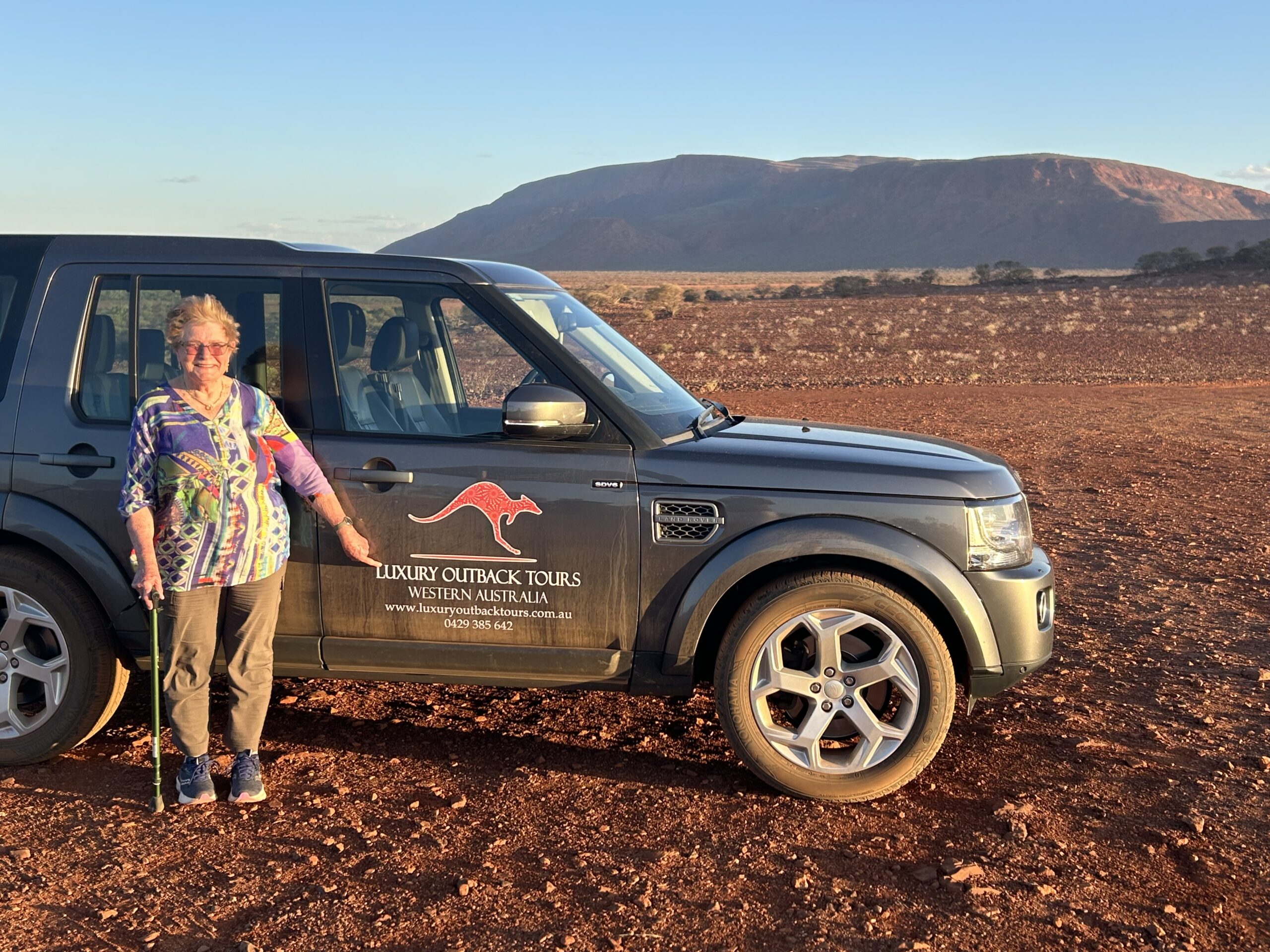
Pickup from Perth. Travel in style in our Land Rover Discovery.
Exmouth to Learmont Airport Transfers
Included Accommodation
- Esperance Hospitality Esperance Surestay. Two Nights
- Rydges Kalgoorlie
- Hoover House B&B Gwalia Leonora
- Queen of the Murchison Cue
- Mt Augustus Tourist Park
- Carnarvon Hospitality
- Ningaloo Coral Bay
- Mantarays Ningaloo Resort. Three Night Stay
Included Meals
Dinner Breakfast and lunch which may include picnics and roadhouse fare and Sunset Drinks at Emu Hill Lookout
Included Entry Fees
Entry Fees, as noted in the itinerary
- Perth Mint,
- Super Pit Mine sight visit
- Gwalia Hoover House B&B
- Snorkeling and Coral viewing Cruise
- Carnarvon Tracking Station and OTC Satellite Earth Station
- Yardie Creek Cruise Turquoise Bay Snorkeling
- Coral Bay Coral viewing and Snorkeling
- Whale Shark Swim
National Park Entry Fees
- Cape Le Grand NP
- Burringurrah (Mt Augustus the largest rock in the world)
- Kennedy Ranges
- Cape Range NP
Experiences
- Perth Mint Gold Pour,
- White Beaches in the Esperance Region
- Lucky Bay, Wharton Beach,
- Tin Camels
- Kambalda Red Hill Lookout
- Shire of Coolgardie is known as the Mother of the Goldfields
- Super Pit Mine sight visit
- Mt Charlot
- Two up School
- Lake Ballard
- Gwalia Hoover House B&B
- Leinster
- London Bridge Cue
- Mt Magnet
- Rock Art at Walga Rock
- Big Bell
- Meekatharra
- Kingsford Smith Mail Run Trail
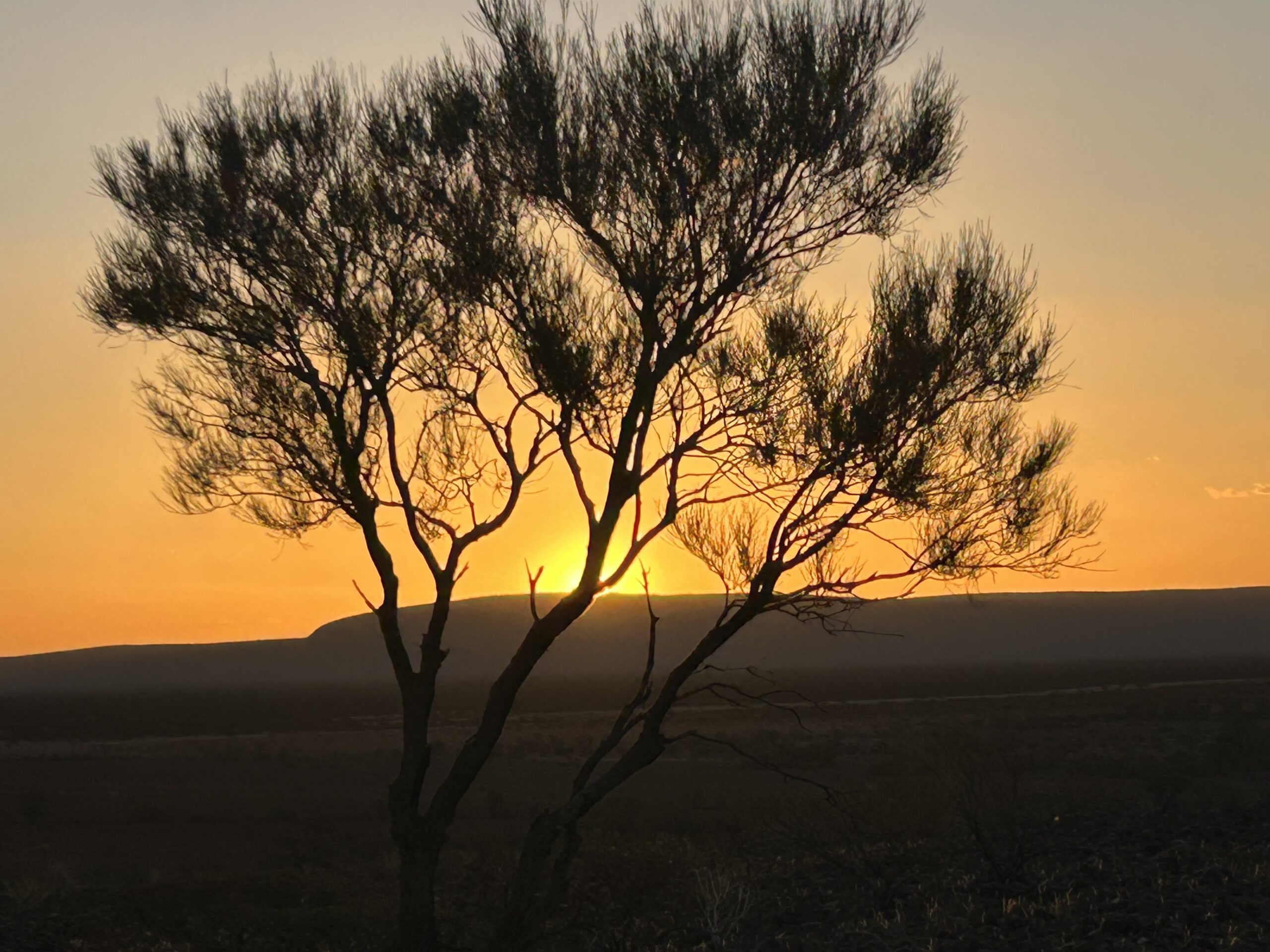
- Sunset Drinks at Emu Hill Lookout
- Burringurrah ( Mt Augustus the largest rock in the world)
- Kennedy Ranges
- Carnarvon Tracking Station and OTC Satellite Earth Station
- Bibbawarra Bore
- Snorkeling and Coral viewing Cruise
- Charles Knife Gorge
- Wapet Oil Well No 3 site
- Vlamingh Head Lighthouse
- Yardie Creek Cruise Turquoise Bay Snorkeling
- Whale Shark Swim
- Shothole Canyon
Things to know
Things to Know
- Flights from Perth to Esperance and from Exmouth to Perth are not included in the tour fee.
- All accommodation is best available in the regions when booked at time of tour deposit paid. If the listed accommodation is not available, we will book alternative as close as possible experience accommodation.
- Visit the Super Pit
This is a Family Friendly Tour, that provides you with loads of information plus will keep the kids entertained with truck spotting and digger watching…
Be a part of the modern day gold rush by donning a hard hat and touring inside the Super Pit Mining Operations. Drive past the huge machinery and enjoy fantastic photo opportunities from the internal viewing platform that offer panoramic views only visible on the tour.
From the safety of the air conditioned Mine-Spec Bus you will be amazed by the size of the CAT 793 Haul trucks as you travel through the tracks of the site. The view of the Super Pit from Harvey Hut will take your breath away as you see the old miner’s workings (shafts) and watch the trucks at work.
Our guide will be more than happy to answer any questions you may have while on the tour.
Please note there is a short induction at the start of all Super Pit Tours.
Tour Highlights
*Be Visitor Inducted to KCGM
*Be amazed by the HUGE dump trucks as you drive around the workshop and operations
*Full commentary with our mine experienced guide
*Panoramic Photo Opportunities from the internal viewing platform
*See inside and get an understanding of this BOOMING industry
Things to Bring Along
Camera, water, reading glasses, wear mandatory clothing and footwear
All tour participants must be wearing the MANDATORY clothing!
Sturdy fully enclosed shoes with socks, which must completely cover the foot, enclosing the whole top of the foot (NO high heels), long sleeves to the wrist and long pants to the ankles. The only acceptable skin that can be exposed is that of the head and hands. Disposal coveralls are available to buy if needed. All participants MUST have a 0.00% zero alcohol breath reading. Failure to meet the above requirements will result in non-participation and zero refund.
You must be checked in at the pickup point at least 15 minutes prior to tour departure.