About the tour
The Best 7 Day Northern Wildflowers Tours. Walk among the Wildflowers with your tour guide.
Immerse yourself on our 7 Day Outback Wildflower Tour in the breathtaking beauty of Western Australia’s wildflowers.
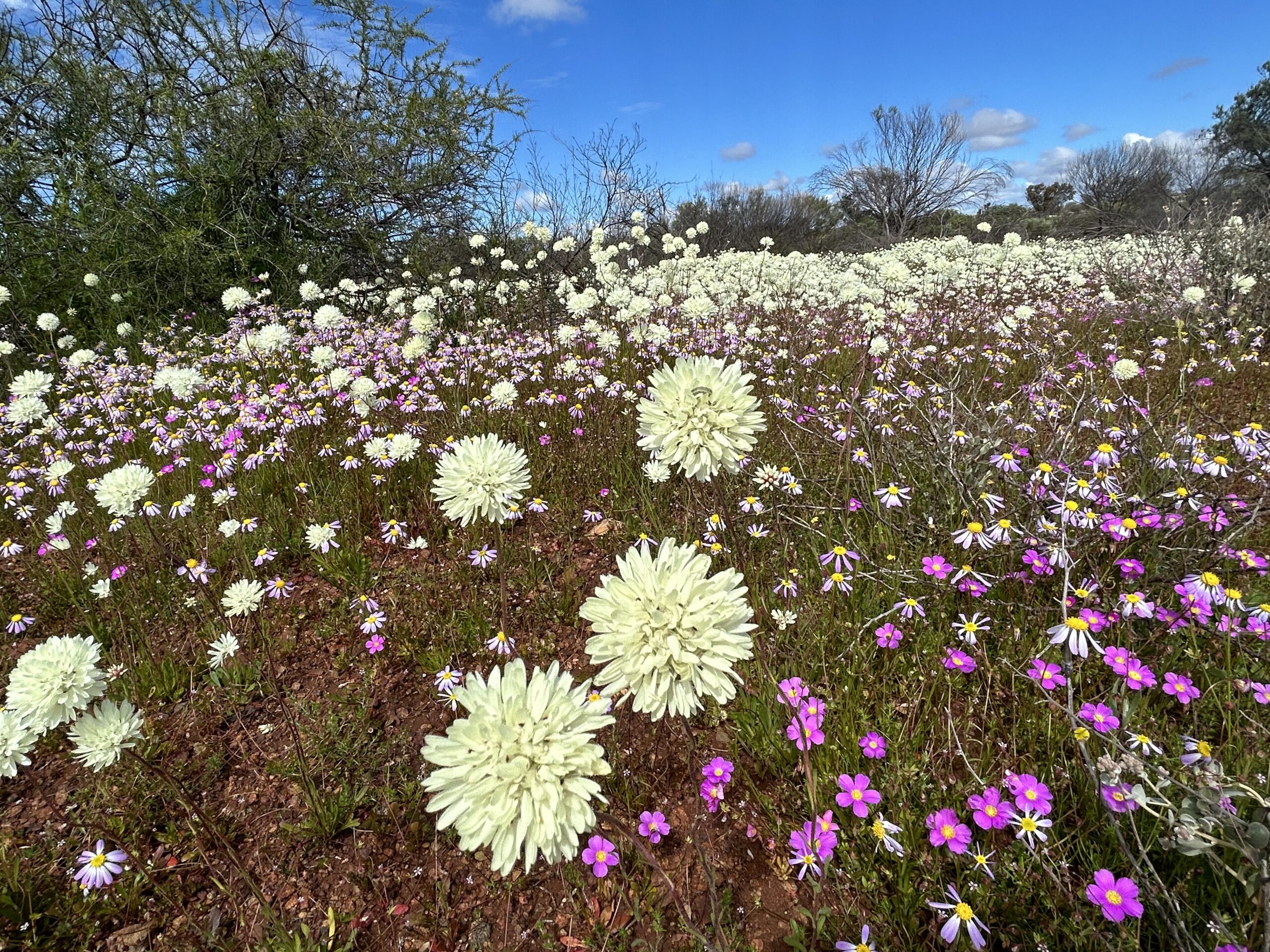
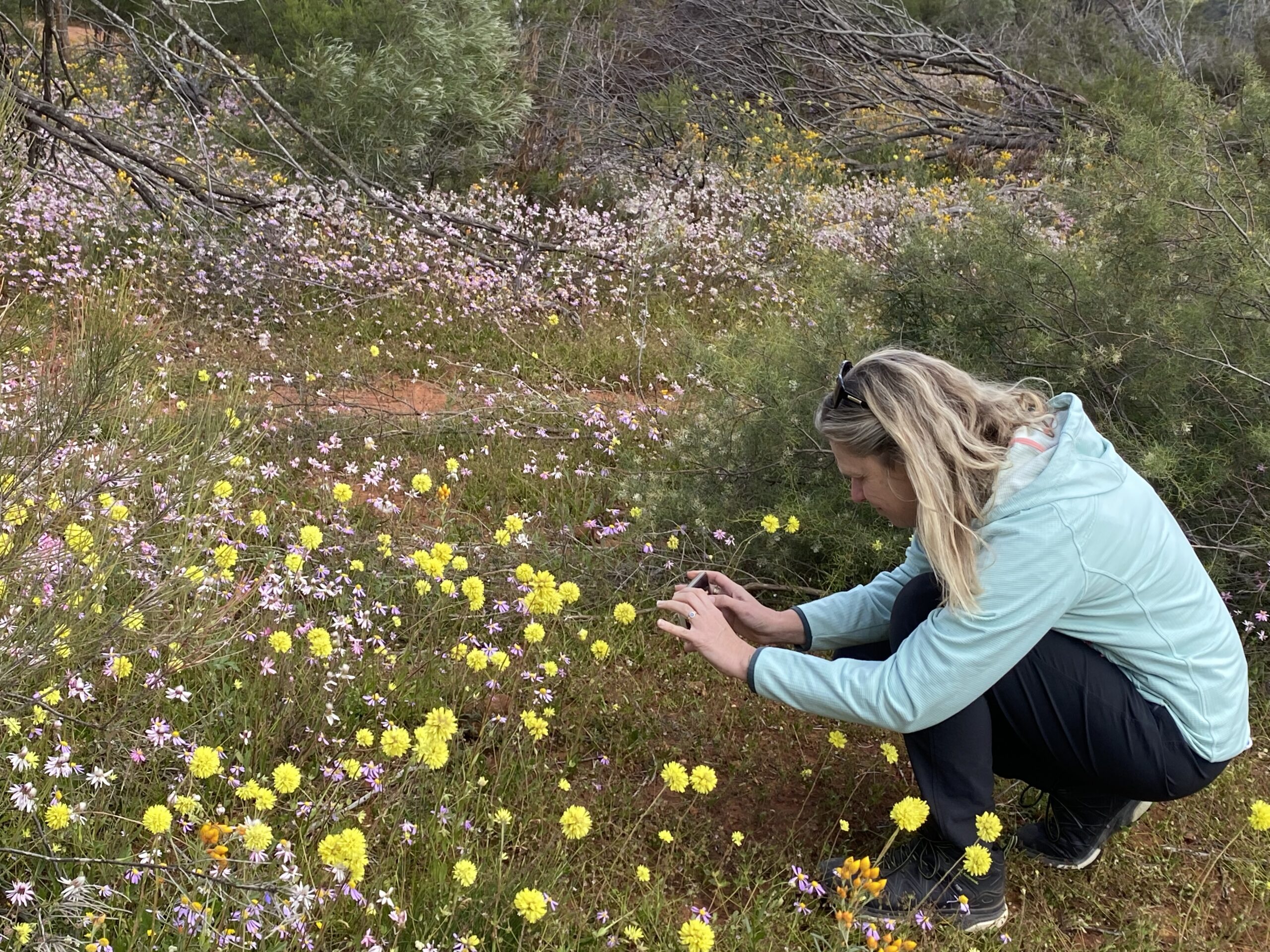
Marvel at the masses of Everlasting Daisies and the exquisite Wreath Flower.
Departure Dates
Sunday 9 August 26
Tour Price
Double $7,698.00 per person
Single $8,298.00
Lesueur NP | Coalseam | Geraldton | Mullewa | Wongan Hills
Tour itinerary
Day 1 – Perth to Jurien Bay
Bindoon, Pheobe Reserve, Jurien Bay
Pickup 7.30am.
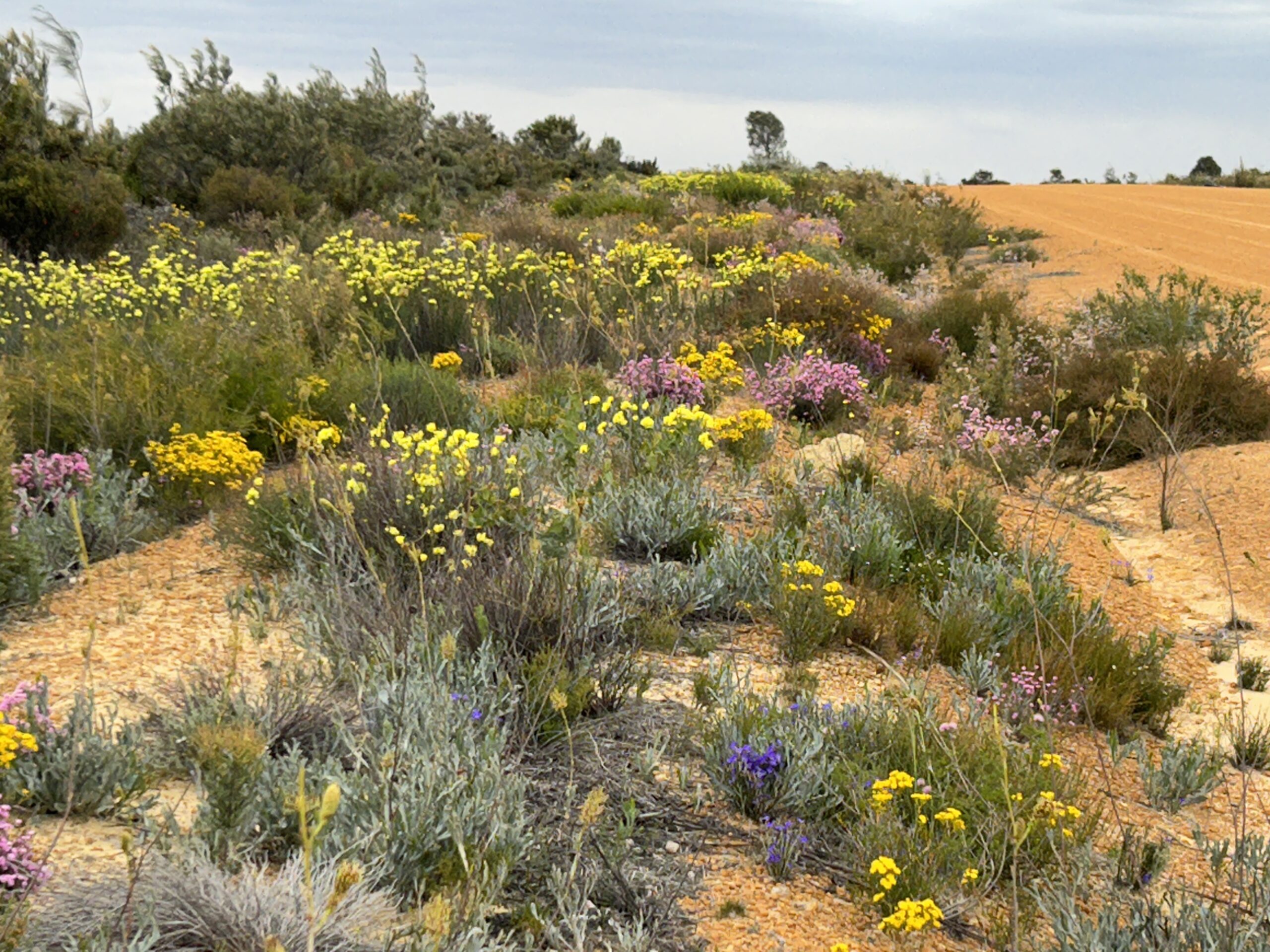
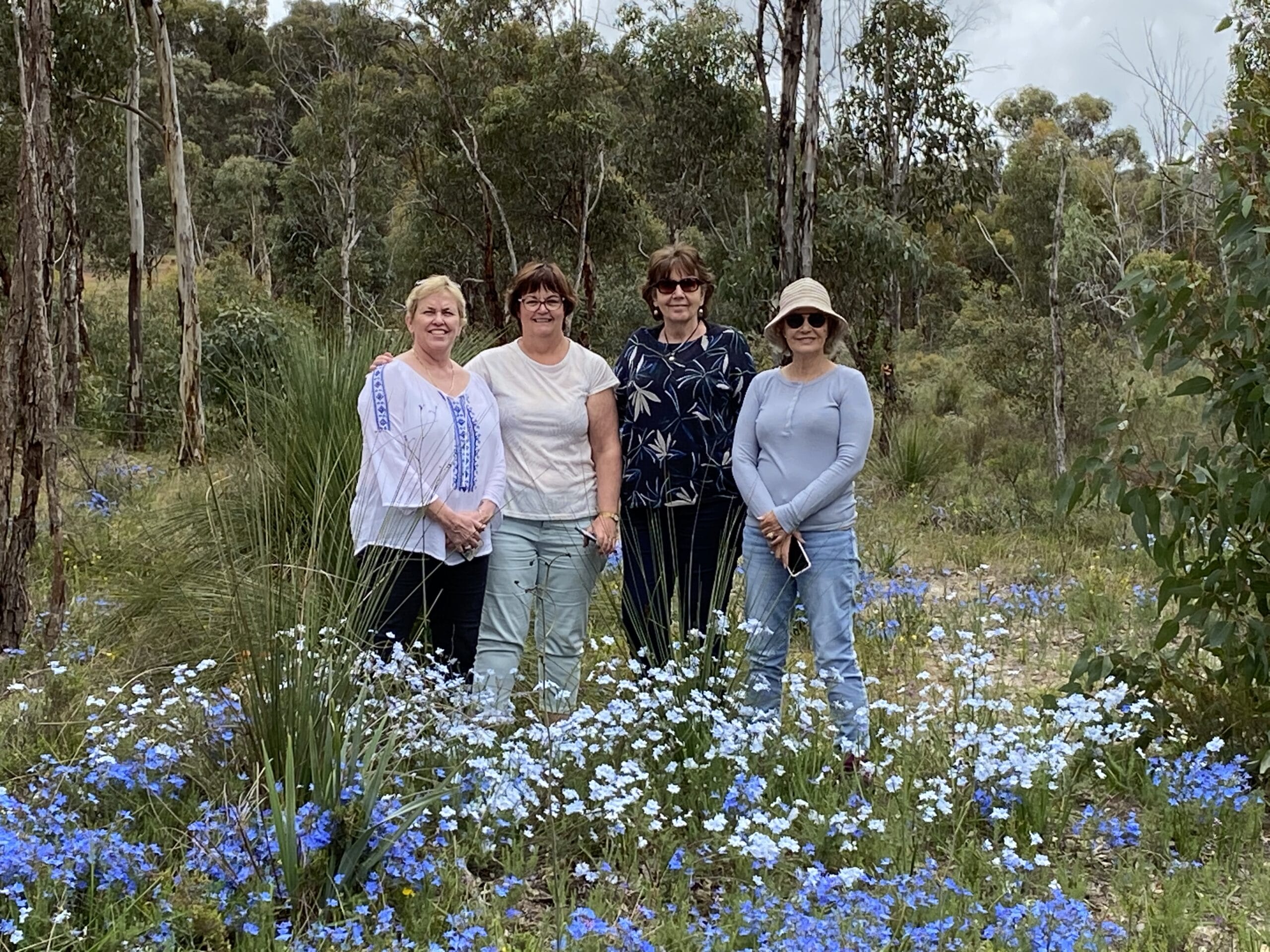
Today on your 7 Day Northern Wildflower Tour you will be seeing masses of eye popping brilliant blue Leschenaultia biloba, orchids, pink Isopogon in the Bindoon region.
Today’s highlights seeing masses of eye popping brilliant blue
Leschenaultia biloba, orchids, pink Isopogon in the Bindoon region. Later head up the Midlands Rd to Moora for Lunch at local stylish Jeanne d’Moore Café
The Jeanne d’Moore Cafe in Moora hand makes the best French-inspired
delicacies that country Western Australia has to offer.
Visit Phoebe Reserve in the Badgingarra area and walk on the historic trails to discover changing flora diversity and stories for stockman passing
through from the coast to inland.
Late this afternoon we head to Jurien Bay our overnight stay.
7 Day Northern Wildflower Tour, The late afternoon soft light is a photographers delight to take photos of the ocean
Accommodation Jurien Bay Motel Apartments
Day 2 – Jurien Bay to Dongara
Jurien Bay, Lesueur NP, Dongara
The coastline around Jurien Bay was first known to Europeans in the 17th century.
In 1801–03, an expedition under the command of Nicolas Baudin sailed along the Western Australian coast. Louis de Freycinet, a cartographic surveyor on the expedition, named Jurien Bay after Charles Marie Jurien of the French naval administration.
The area was visited by English explorers from 1822 onwards. The bay was first surveyed by Captain James Harding, the harbourmaster of Fremantle, in 1865. More extensive survey made by Staff Commander W. E. Archdeacon R.N. in 1875.
This morning we visit Lesueur National Park
Lesueur National Park straddles the boundary between the Wheatbelt and Mid West regions of Western Australia, north of Perth. The park was gazetted in 1992. It includes two mesas known as Mount Lesueur and Mount Michaud and supports a highly diverse flora.
Flora includes Eucalyptus woodland with a diverse understorey
Lesueur National Park lies in the Geraldton Sandplains bioregion, which is characterised by scrubby heath with a high number of plants from the family Proteaceae.
Vegetation in the park is structurally complex, with patches of woodland amongst shrublands.
There are over 900 indigenous plant species in the park, many of which are endemic. Rare or threatened species include the Mount Lesueur Grevillea, Forrest’s Wattle, the Lesueur Hakea and the Laterite Mallee.
The park is the northern limit for jarrah and mountain marri, both of which grow as mallees instead of the more usual tall tree form.
Lesueur National Park is under threat from the effects of Phytophthora dieback, a disease which kills plants and is spread through movement of infected soil or water
1980s coal mining and power station proposals
In the 1980s, due to appraisals of coal deposits in the area, the Mount Lesueur and Hill River areas were in controversy over proposed coal mining and power station development, until the creation of the National Park in 1990.
This afternoon travel to Eneabba region
Later this afternoon we follow the Brand Hwy up to Dongara our overnight stay.
Dongara and its twin town, Port Denison, are relaxed coastal towns on Western Australia’s Coral Coast. The region is known as the “Rock Lobster Capital of Australia,” pristine turquoise bea rich colonial history.
Accommodation: Dongara Hotel Motel
Day 3 - Coalseam, Mullewa, Hutt Lagoon, Kalbarri
We take a look around Dongara and Port Denniston. The place name ‘Dongara’ is an anglicised rendition of Thung-arra, the local Wattandee people’s name for the estuary adjacent to the town, meaning ‘ Sealion place’.
European settlement around the estuary began in 1853 when a harbourmaster, Edward Downes, was stationed there to look out for passing ships.
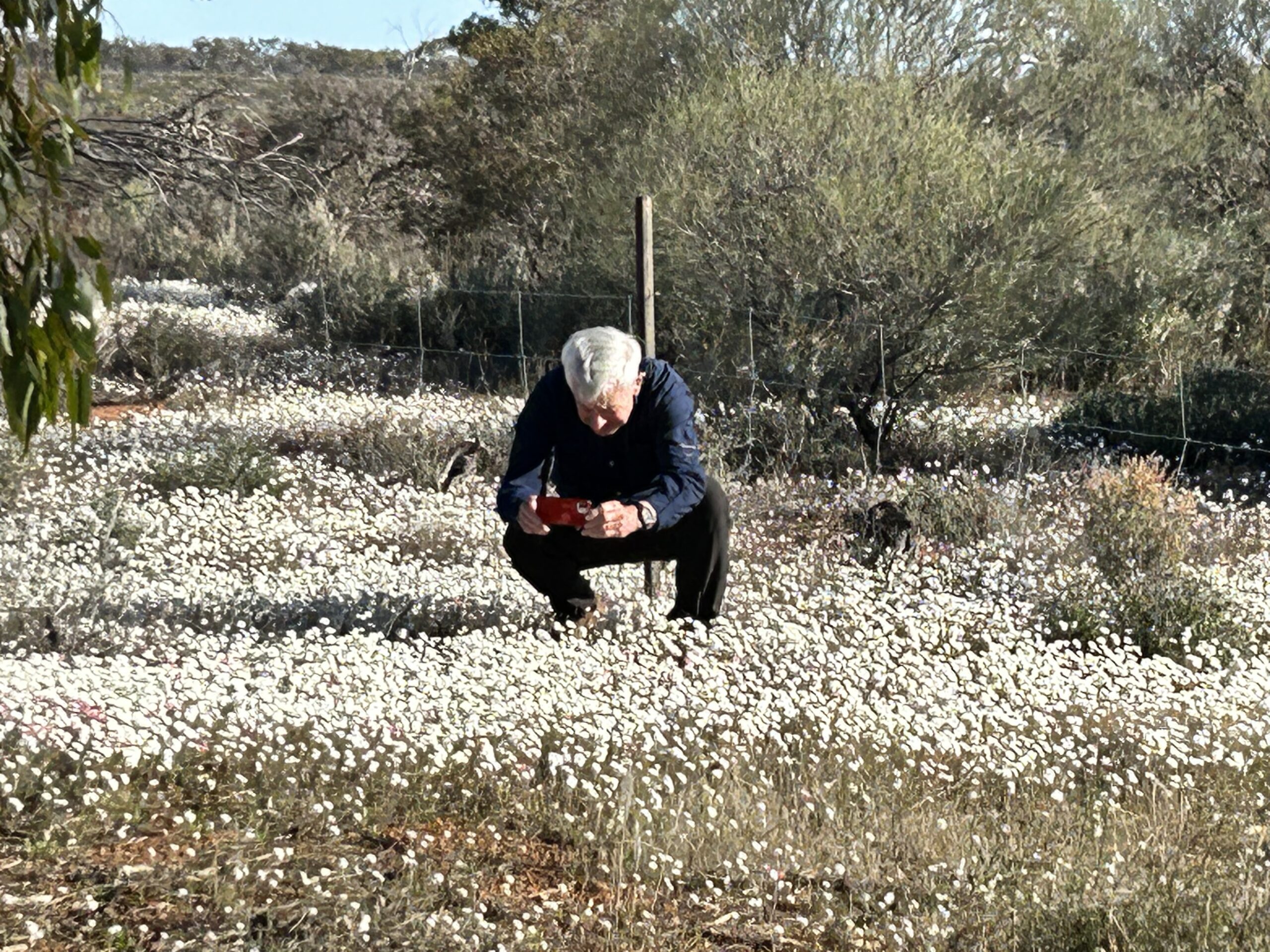
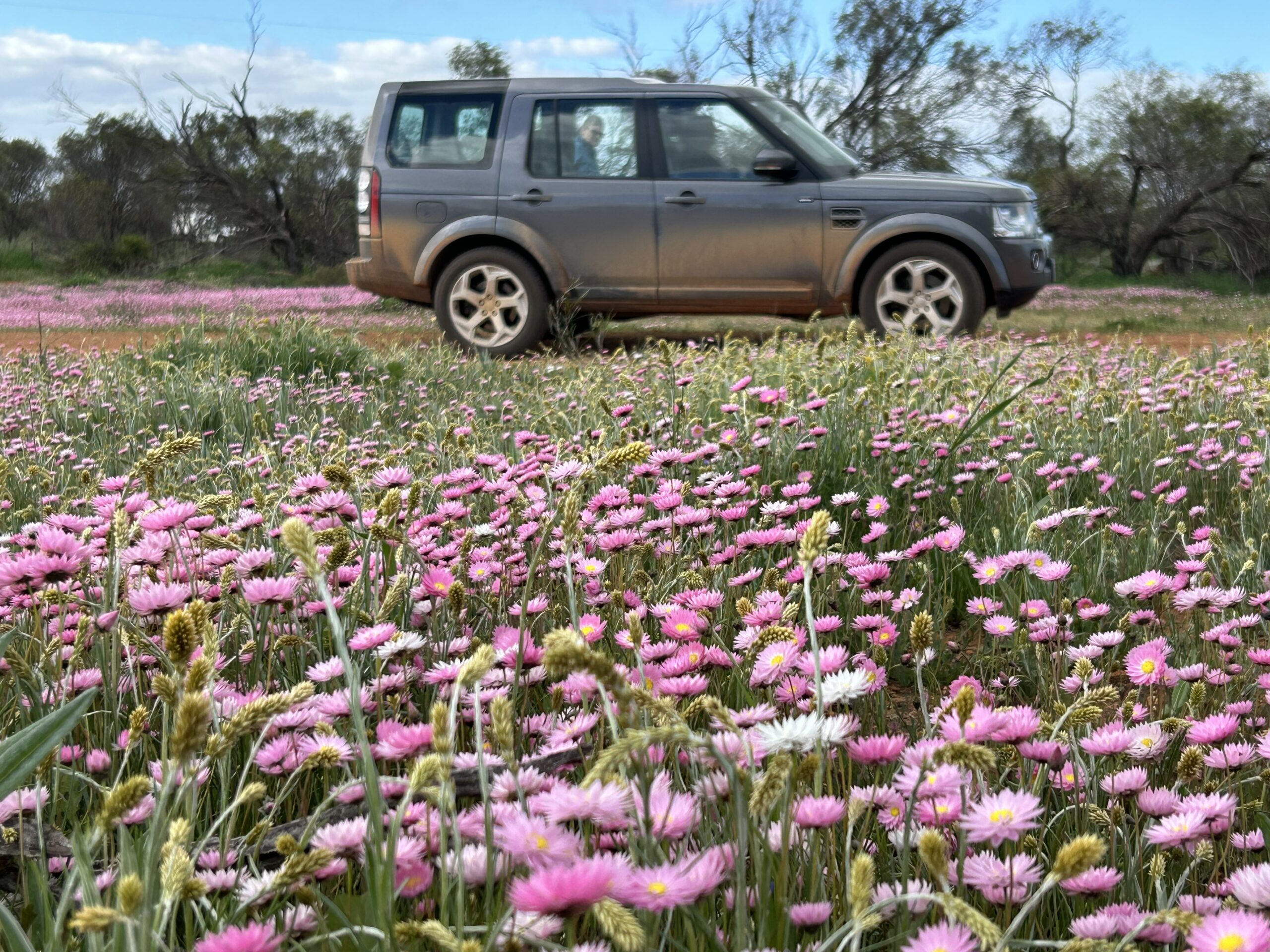
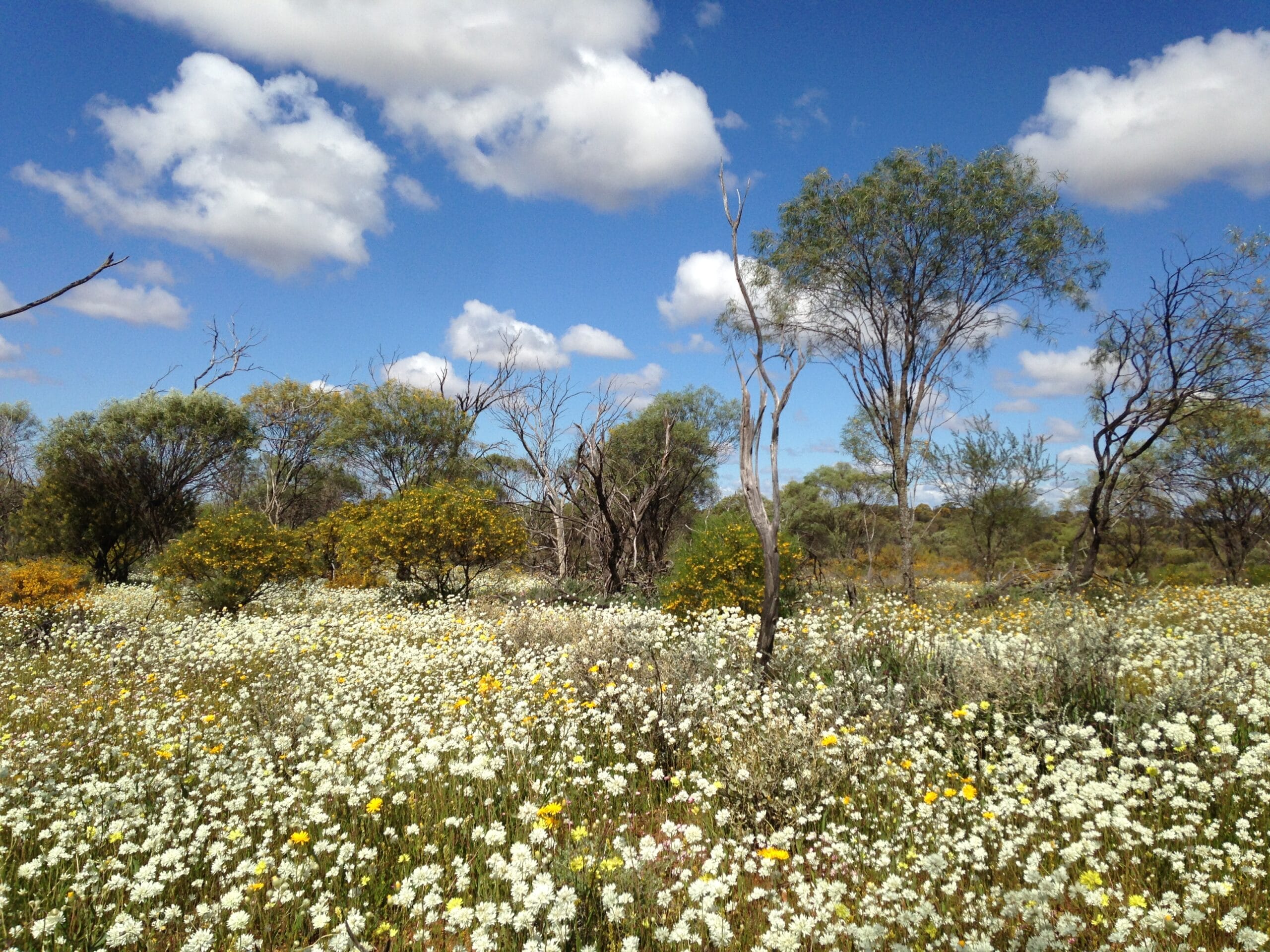
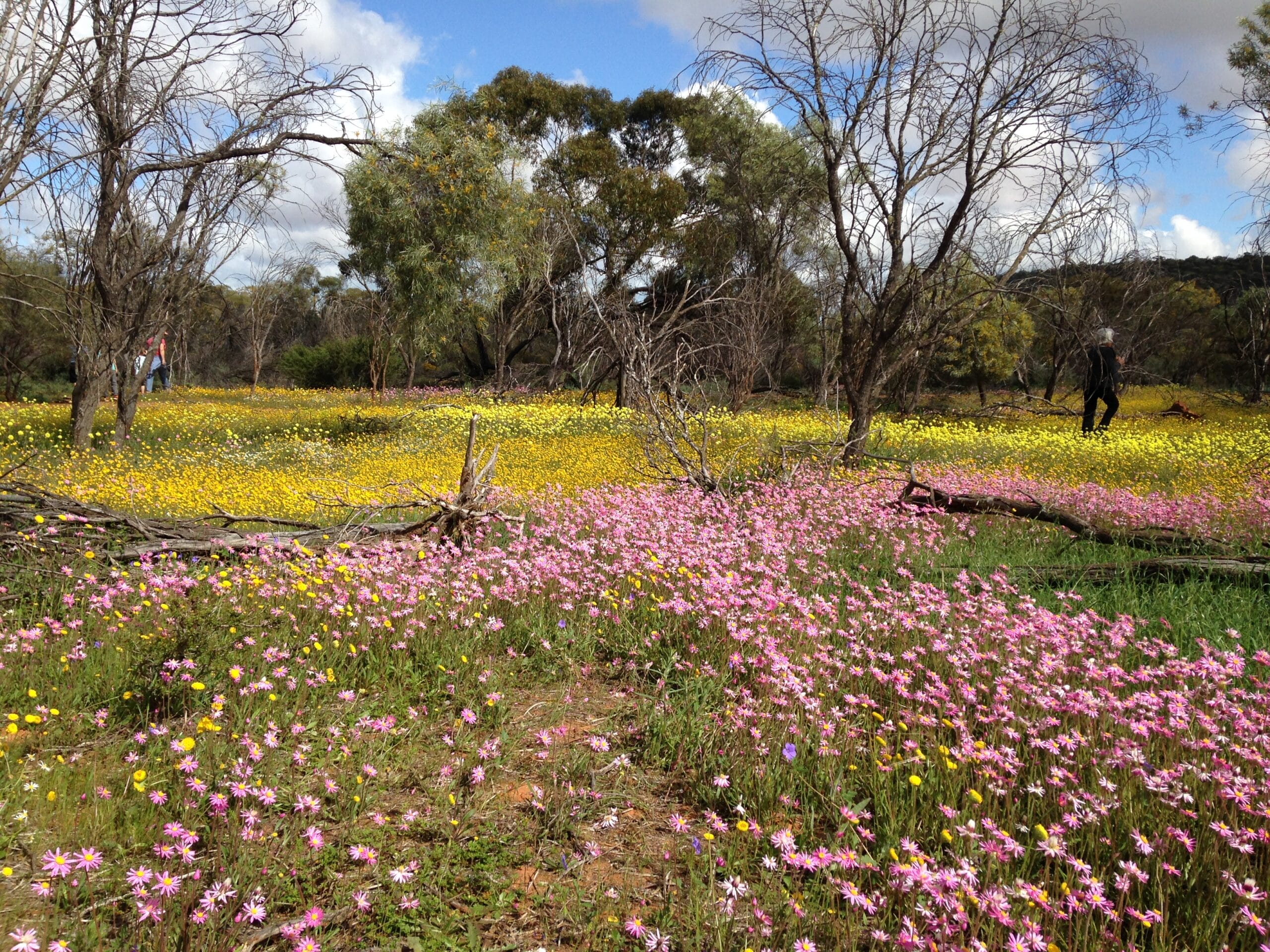
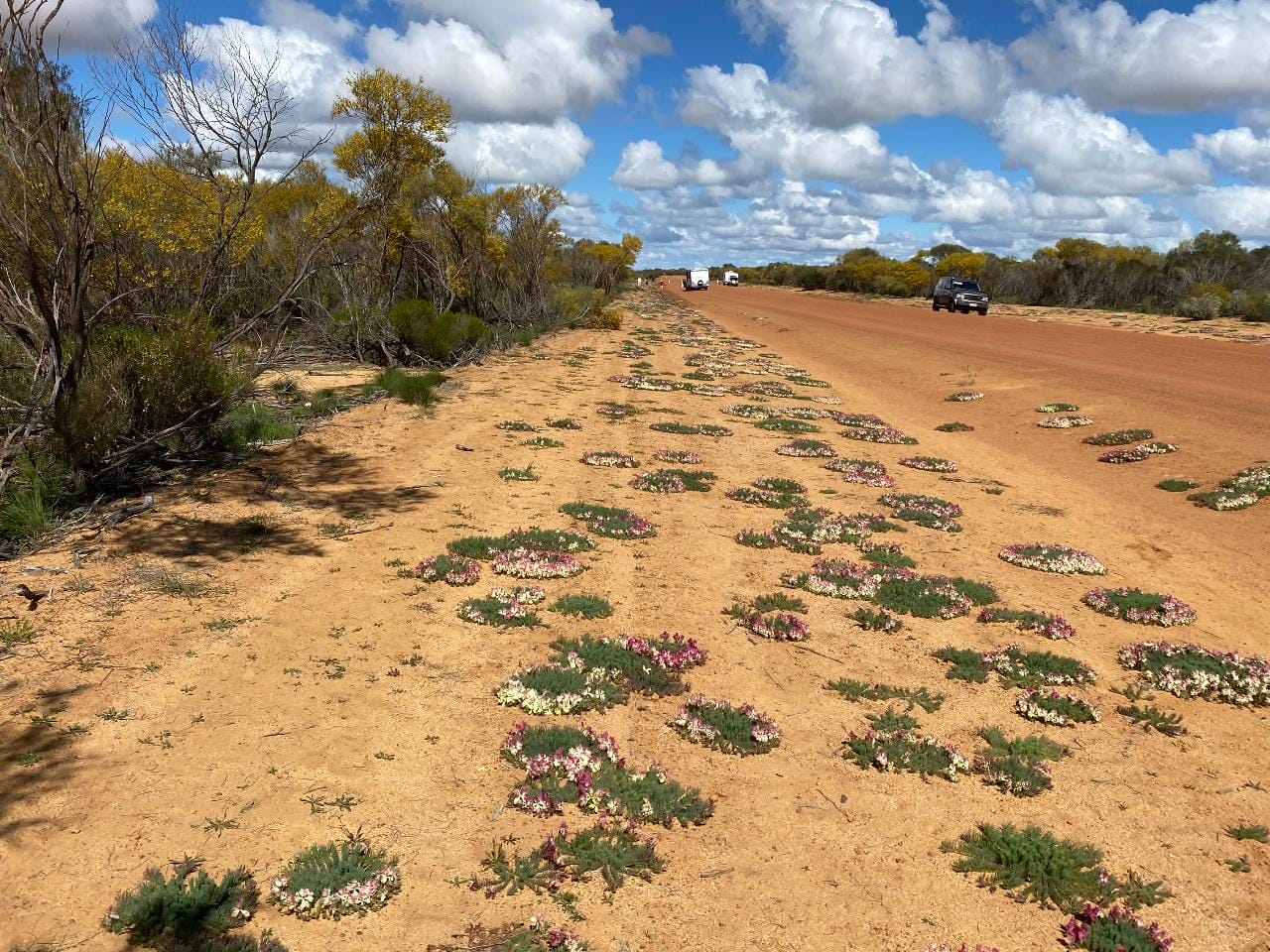
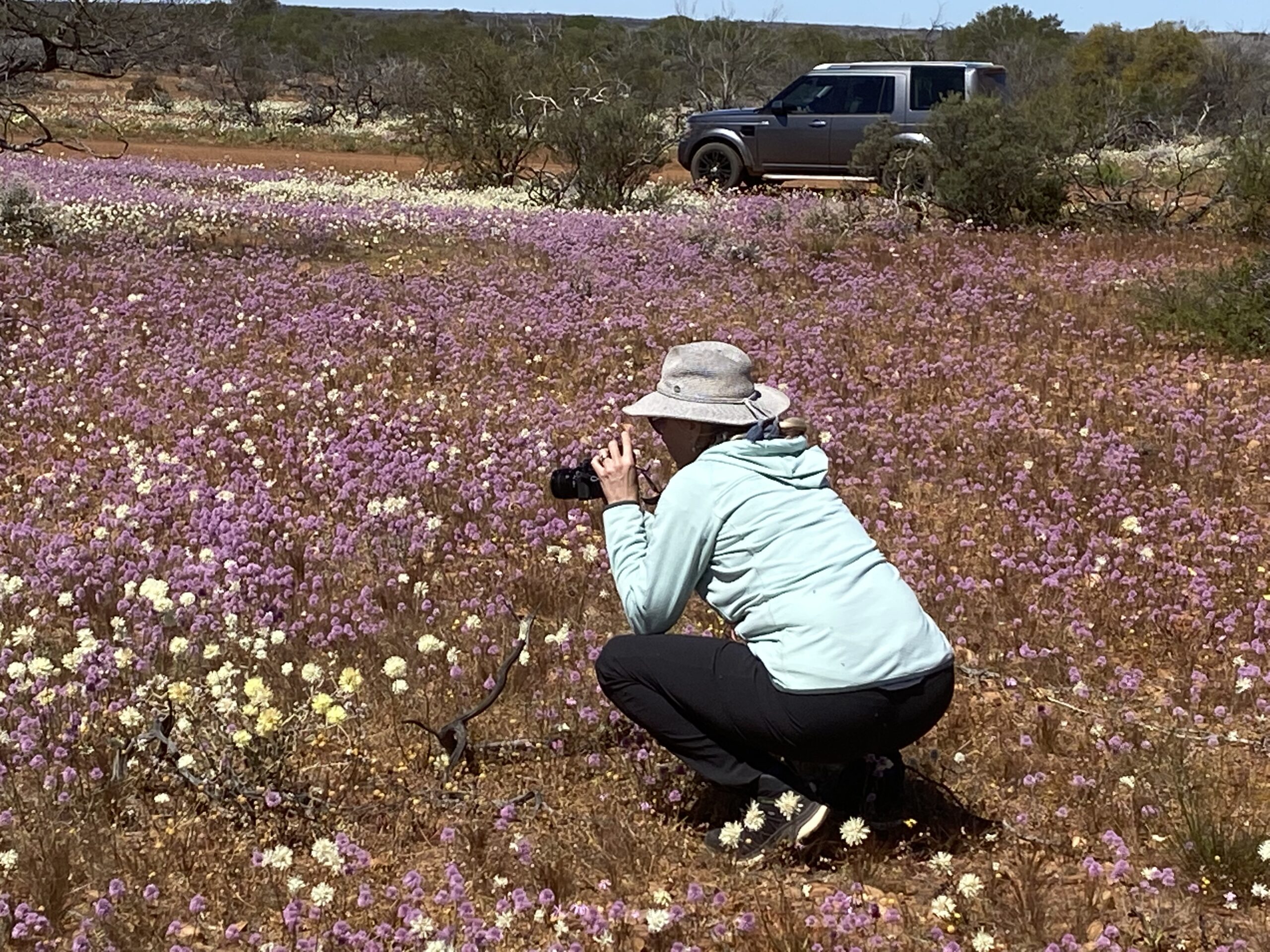
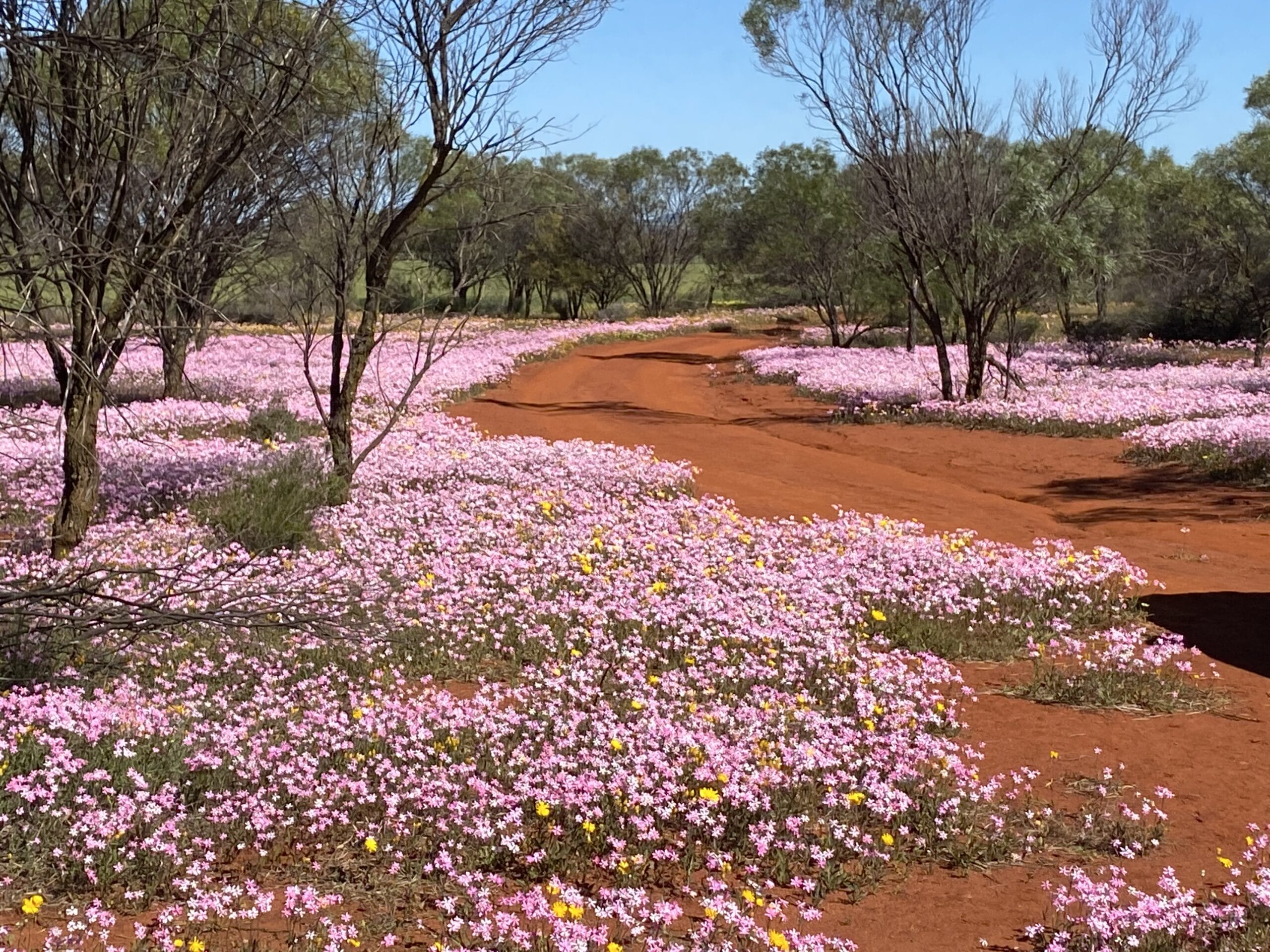
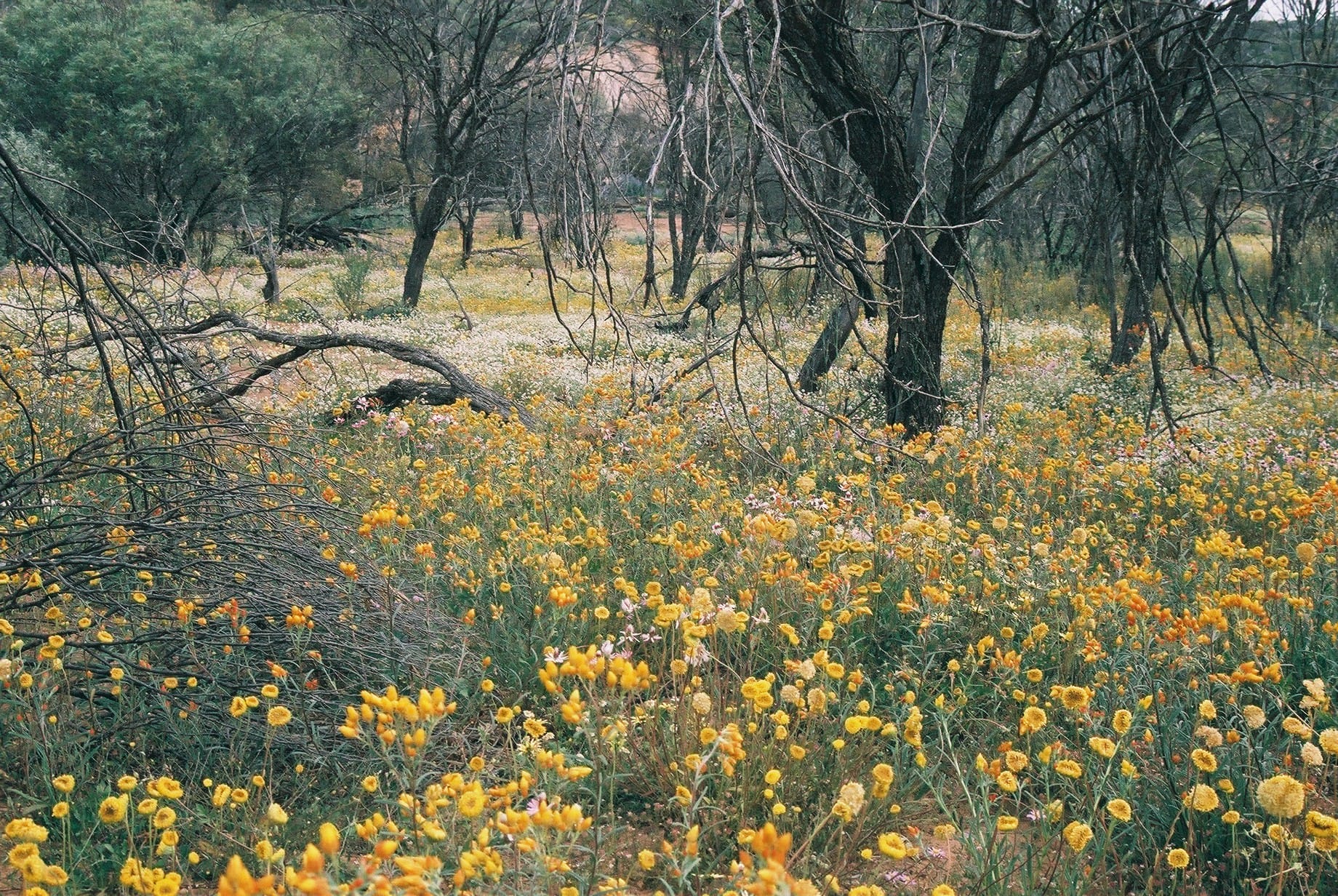
Today we will see what most people think of when they think Western Australia Wildflowers, delicate expanses of pink, yellow and white everlasting daisies in the Coalseam Conservation Reserve and along isolated roads.
At Pindar browse along the road verge to marvel at the iconic Lechenaultia macrantha common name wreath Lechenaultia, an absolute must see.
At Mullewa visit Helen Ansell Studio Gallery. Helen made her mark on the international art stage, all the way from her art gallery nestled in Mullewa, a small town in Western Australia. Growing up in Ululla, a remote aboriginal community in central Western Australia, Wiluna area. Helen’s connection to the indigenous and regional community of central WA and the wild desert landscape is vividly reflected in her artwork.
Helen captures the spirit of Australian art through her vibrant paintings.
After lunch tour to Northampton, one of the oldest settlements outside Perth today, classified by the National Trust as a Historic Town.
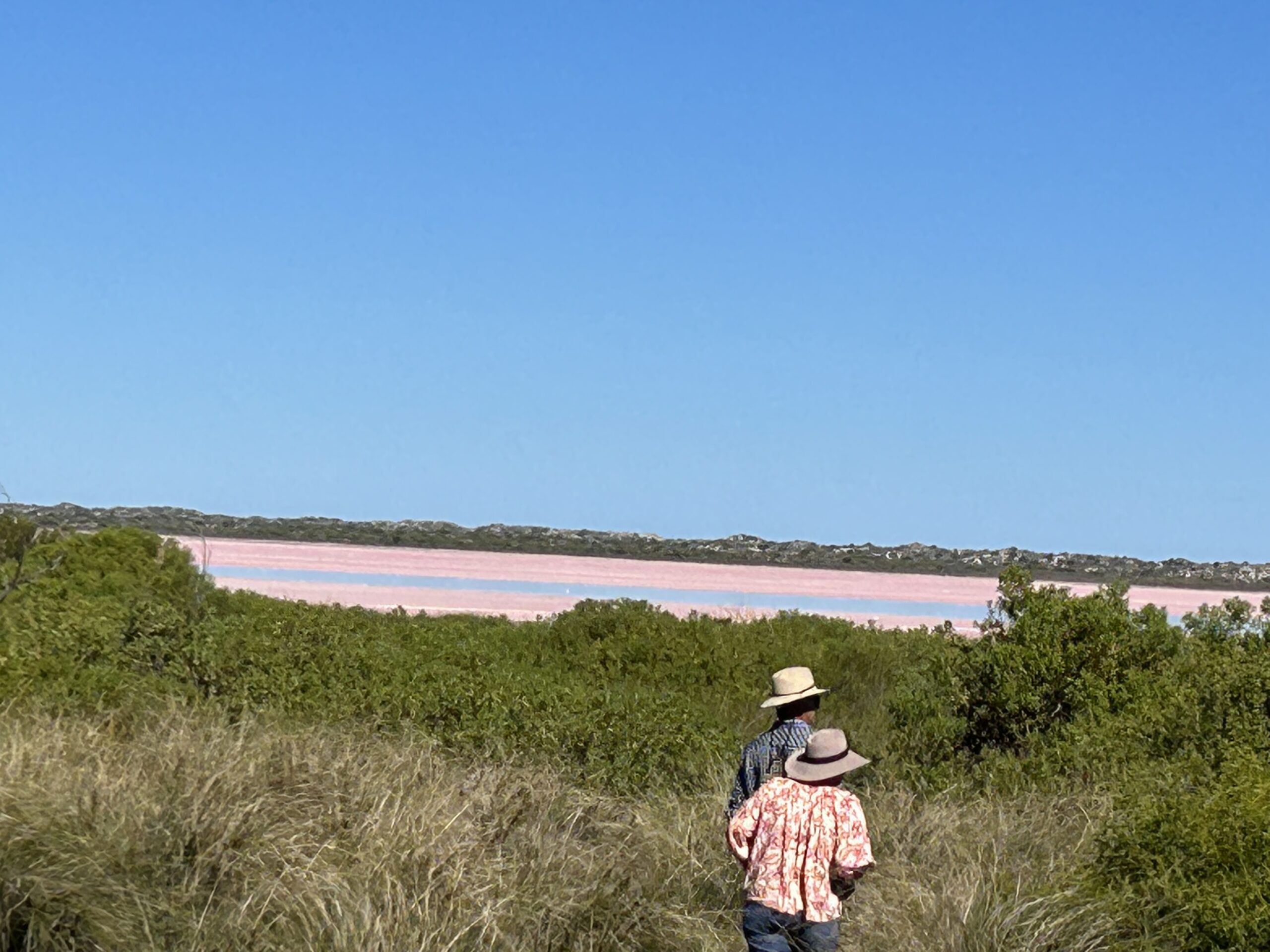
Visit Hutt Lagoon a vivid pink Salt Lake where beta-carotene is harvested for commercial use. A fascinating sight.
drive further up the coast, and visit coastal gorge Pot Alley.
Kalbarri nestled at the Murchison River mouth and surrounded by stunning coastline, soaring river gorges and protected bays.
Kalbarri is our two-night stay.
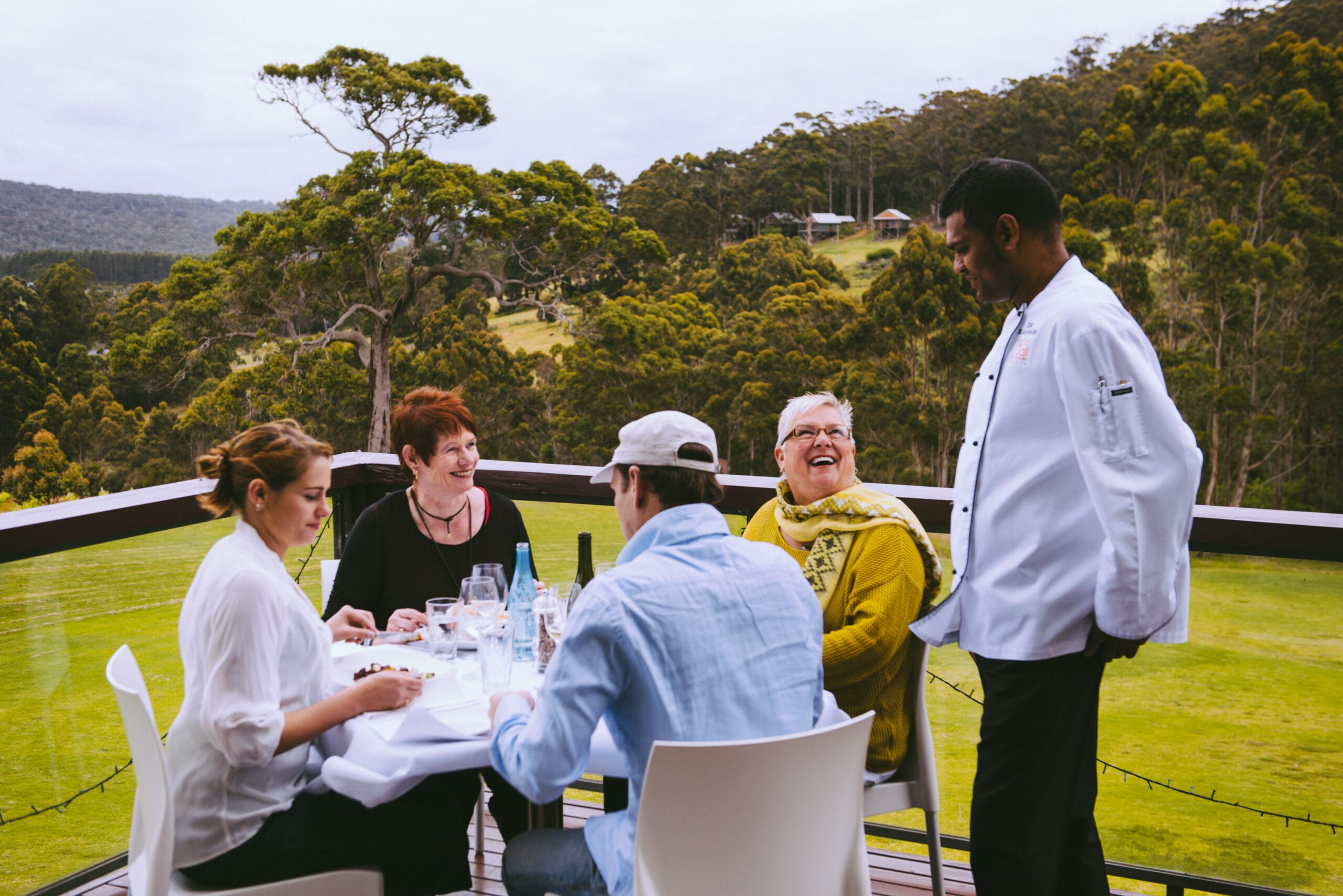
Did we say casual dining? Yes! And this is a Kalbarri visit must do. This evening, enjoy casual Aussie dinning of local seafood.
Finlay’s Kalbarri is an open-air restaurant located in the heart of Kalbarri. The restaurant is located off-the-beaten track, a couple blocks away from the beach. You are invited to enjoy a meal using fresh ingredients including local seafood, beers from the in-house craft brewery and quirky atmosphere.
Accommodation: Kalbarri Edge Resort
Day 4 – Kalbarri
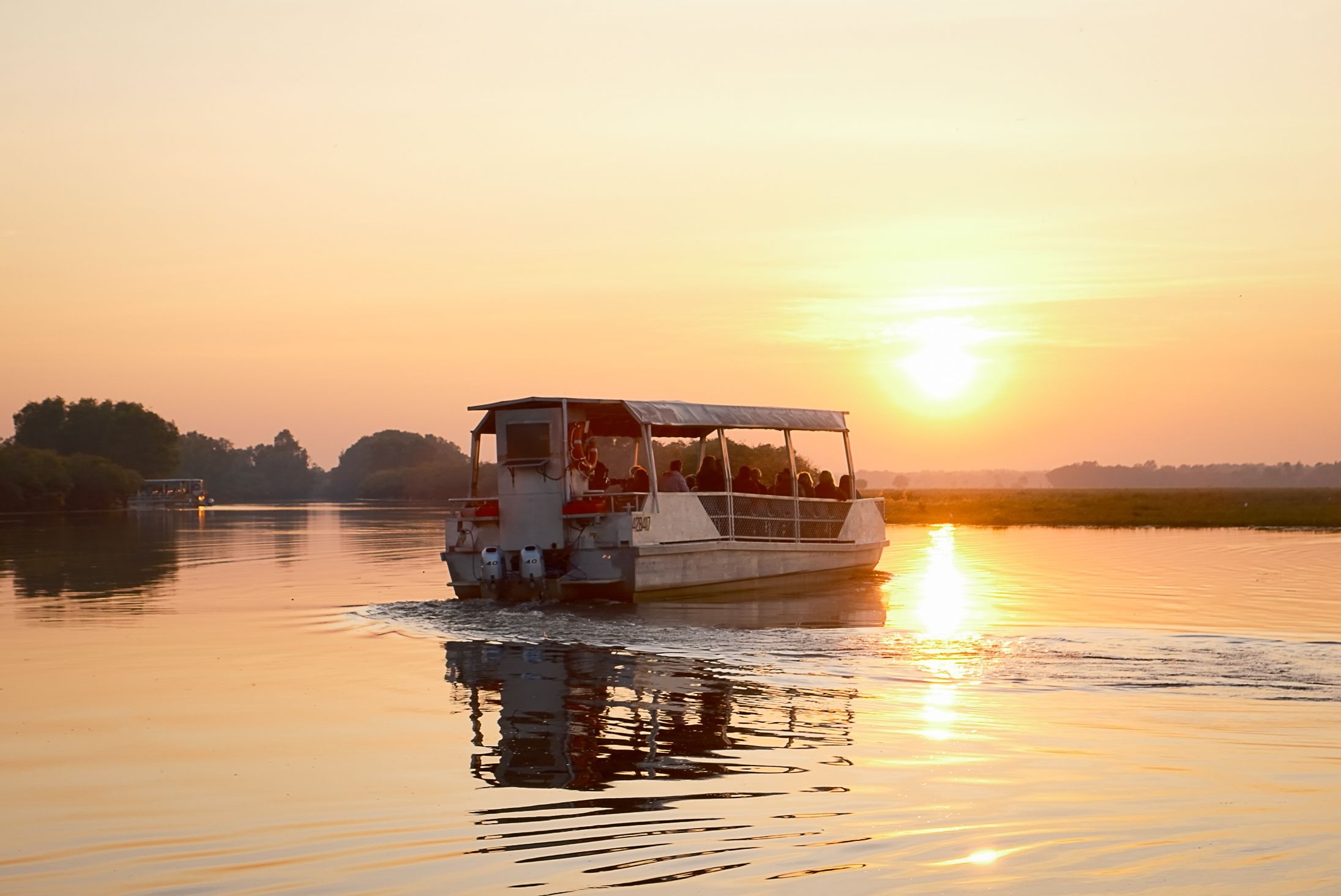
Before joining Princess Kalbarri Wilderness Cruises with Skipper Grant to explore the mouth of the Murchison River ecosystem, we’ll visit Jakes Bay to admire its striking pink-hued sand. Created by garnet crystals naturally deposited along the shoreline, this standout feature shifts in intensity throughout the year.
The cruise follows the channel up the river with full commentary along the way, there is no rush and there’s a lot to see.
The lower reaches of the Murchison River are home to a number of species of birdlife including Ospreys, Kites, Pelicans, Egrets, Australian Shell Ducks, Black Swans and our local White Breasted Sea Eagles.
As well as Emus, Kangaroos and wild Goats are often seen on the riverbanks.
The river at times can be 40mm deep with mullet jumping, small fish and crabs.
The Murchison River is a very vital ecosystem and what we see on each cruise is always different.
At the turn around point sometimes there is time to pull up to the shore and take a stroll along the riverbank, then on the return journey plenty of time to relax, take photos and enjoy.
The cruise comes to and end at the Murchison River Mouth, one of WA’s most treacherous.
It’s impressive to watch the water move through channel and boats come and go.
This afternoon we visit the Kalbarri National Park for spectacular views of the Murchison River Gorges.
Experience new Skywalk which over hangs the Murchison River gorges 100 metres above the riverbed. Awesome views of the Murchison River wending its way out to the coast at Kalbarri.
Kalbarri National Park is highly regarded for its extraordinary seasonal flowers which can start in July and continue to flower late October with pops of colour from local Verticordias and many other local species.
Kalbarri National Park protects a dramatic landscape of red-and-white banded Tumblagooda sandstone east of Kalbarri, including the lower reaches of the Murchison River, its spectacular gorge system, and the river mouth near Meanarra Hill.
Along the park’s western edge, towering coastal cliffs rise more than 100 metres above the Indian Ocean. This rugged coastline is shaped by wind and water, creating striking natural formations including sea stacks, sea arches, and the famous Natural Bridge.
Accommodation: Kalbarri Edge Resort
BLD
Day 5 –Kalbarri to Geraldton
This morning on this 7 Day Northern Wildflower Tour we head east through Kalbarri National Park visit Hawks Head Lookout and Ross Graham lookout to view more of the Murchison River and wildflowers.
Closer to Geraldton visit Mills Point Lookout that offers spectacular views across the Chapman Valley to the east and Geraldton to the west.
Geraldton is a vibrant coastal city in Western Australia’s Mid West region and serves as the gateway to the Coral Coast. Renowned for its world-class beaches, consistent sunshine, and thriving food and arts scene, the city is a prime destination for outdoor adventures and maritime history including the famous Batavia shipwreck, and as the primary hub for the rock lobster industry and the Yamaji Yamaji Aboriginal culture
Geraldton Port is a major regional export hub, handling bulk commodities from the Mid West’s inland and outback regions, including iron ore, agricultural grains such as wheat, barley, canola and lupins, as well as mineral and non-mineral sands
We visit HMAS Sydney Memorial; the beautifully designed memorial features a silver dome of 645 seagulls to represent the loss of HMAS Sydney sailors.
Visit St Francis Xavier Cathedral built in stages from 1914 to its eventual opening in 1938. The Byzantine style architecture is one of Monsignor John Hawes’ greatest masterpieces.
Explore the Yamaji Art Centre which is Aboriginal owned and operated and provides professional services to support and develop Aboriginal artists living in the Lower Murchison region of Yamaji Country.
Accommodation: The Ocean Centre Hotel
Day 6 - Geraldton to Dalwallinu
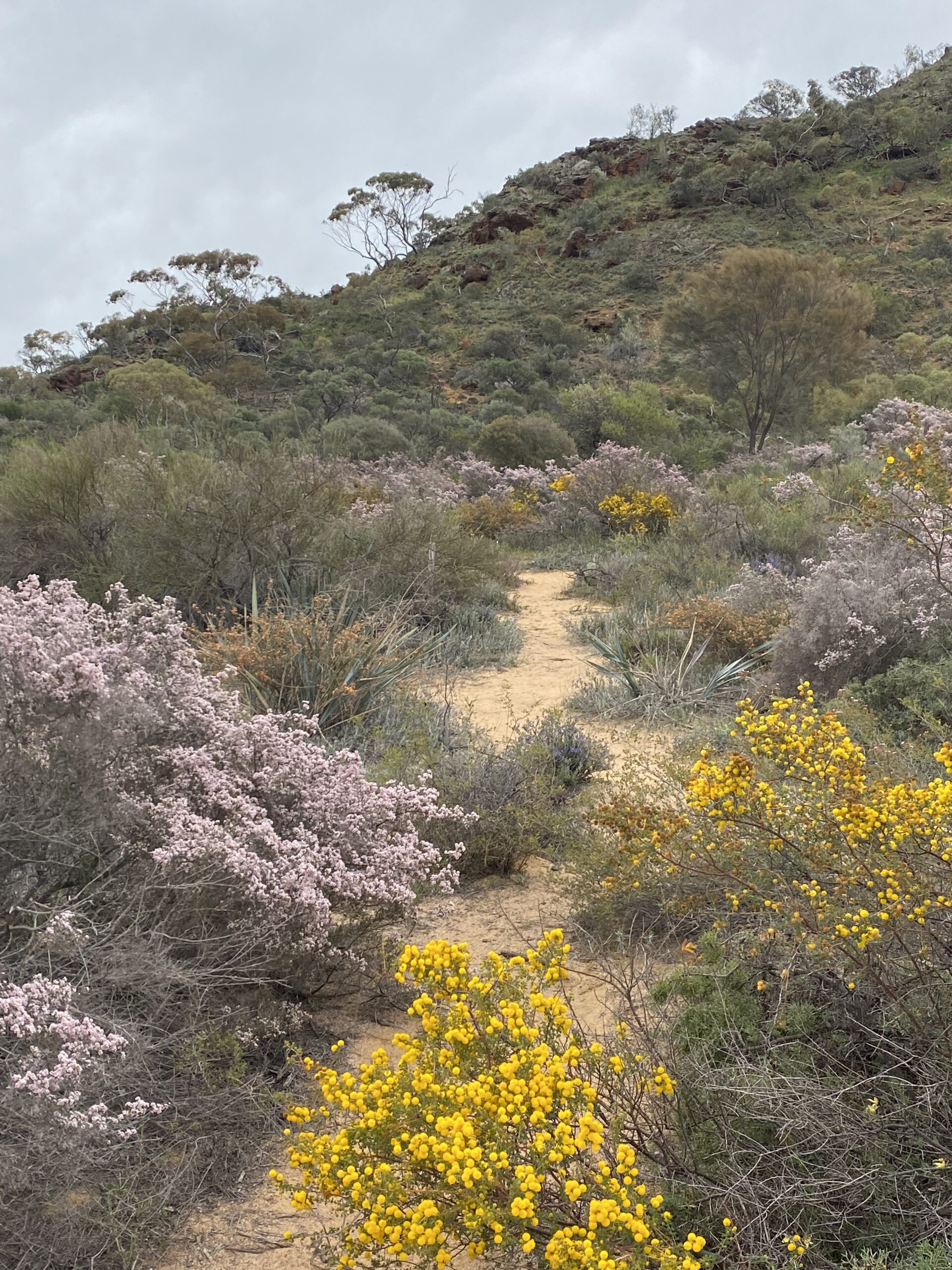
This morning visit Depot Hill Reserve a delightful walk with everlasting daisies and orchids. On either side of a meandering pathway offers unparalleled access and viewing of a rich, rare, and colourful assortment of wildflower species. Discover one of Western Australia’s true wildflower hotspots.
Visit Three Springs to see stunning the Rose Mallee (Eucalyptus rhodantha)
And take in the 360 panoramic view at the Talc Mine Lookout, Western Australia’s first talc mine. Talc is mined by open cut method and exported for use in paper, paint, and ceramic industries.
Three Springs talc is also processed in WA for cosmetics, agriculture, and carving blocks. The mine is the largest Talc Mine in the southern hemisphere and the second largest in the world with an annual production exceeding 100,000 tonnes.
Carnamah Shire is one of the richest areas in the state for flowering plants and explodes into colour during the annual wildflower season from around August to October. This afternoon we look at the rare Darwinia polychroma also known as Harlequin Bell a dainty maroon flower.
The town is also becoming better known for Astro Tourism as a great place to see the Milky Way due to little light pollution.
Walk from the centre of town up to the scenic Lakes Lookout (found 1km out of town on Carnamah-Eneabba Road) where you can peer out over the Yarra Yara Lake System. Depending on the season you might see salty pink lakes in summer, to the deep blue lakes in winter.
Carnamah locals have brought the townsite to life with the creation of three giant wall murals. ‘Drovers Rest’ is on the local Hardware Store, ‘Sale Oh’ is found at the Landmark building and ‘ Macphersons View’ is on the Council administration building.
Historic buildings include: the post office, St Andrews Church, designed by Monsignor John Hawes, and the Uniting Church. Macpherson Homestead was built in 1869 and once served as a post office and wayfarers’ rest home.
Dalwallinu is famous for having the largest variety of wattles (acacias) found anywhere in the world. Within 100km of Dalwallinu there are 195 varieties. Dalwallinu is known as a “Place of Wheat, Wattles and Wildflowers.
Overnight stay is at Dalwallinu and offers walk trails for those who are interested in evening or early morning walks.
Accommodation: Wheatlands Motel
BLD
Day 7 - Wongan Hills to Perth
This morning visit Wongan Hills, The Hills has the largest single area of natural vegetation remaining in the Northern Wheatbelt.
Wongan Hills’ flora is extremely diverse with more than 250 species of flowering plants.
There are five species of gazette rare flora in the Wongan Hills Nature Reserve, and numerous species of priority flora.
We will one sight that has the rare Wongan Cactus – Daviesia Euphorbioides, explore the local orchids and look around the area.
And visit Mt Obrien for expansive panoramic vistas of the region.
Lunch today at New Norcia. Look around this unique Monastery Town before heading back to Perth.
We will have you back into Perth 5pm.
BL
Departure Dates
Sunday 9 August 26
Tour Price
Double $7,698.00 per person
Single $8,298.00
Come and see the biggest wildflower collection on earth that calls Western Australia home. Seven Day Northern Wildflower Tour
More than 13,000 species of flora burst into brilliant bloom across the state each season, delivering a flora display like no other.
Tour inclusions
Travel Arrangements
Pickup from Perth. Travel in style & luxury in our Land Rover Discovery’s.
Included Accommodation
- Jurien Bay Motel Apartments
- Dongara Motel
- Kalbarri Edge Resort
- Geraldton Ocean Centre Hotel
- Dalwallinu Wheatland Motel
Included Meals
Breakfast options include continental or cooked meals to start your day right.
Lunch, enjoy light picnic-style sandwiches, wraps, or other takeaway options from road houses, or packed picnic lunches accompanied by juice or soft drinks.
Dinner is also included..
Included Entry Fees
- Lesueur National Park
- Kalbarri National Park